RETAIL · PRACTICAL GUIDE
By Safety Inspectors UK · 6 November 2026
Off the delivery. Onto the floor. Into the stockroom. Back out to the shelf.
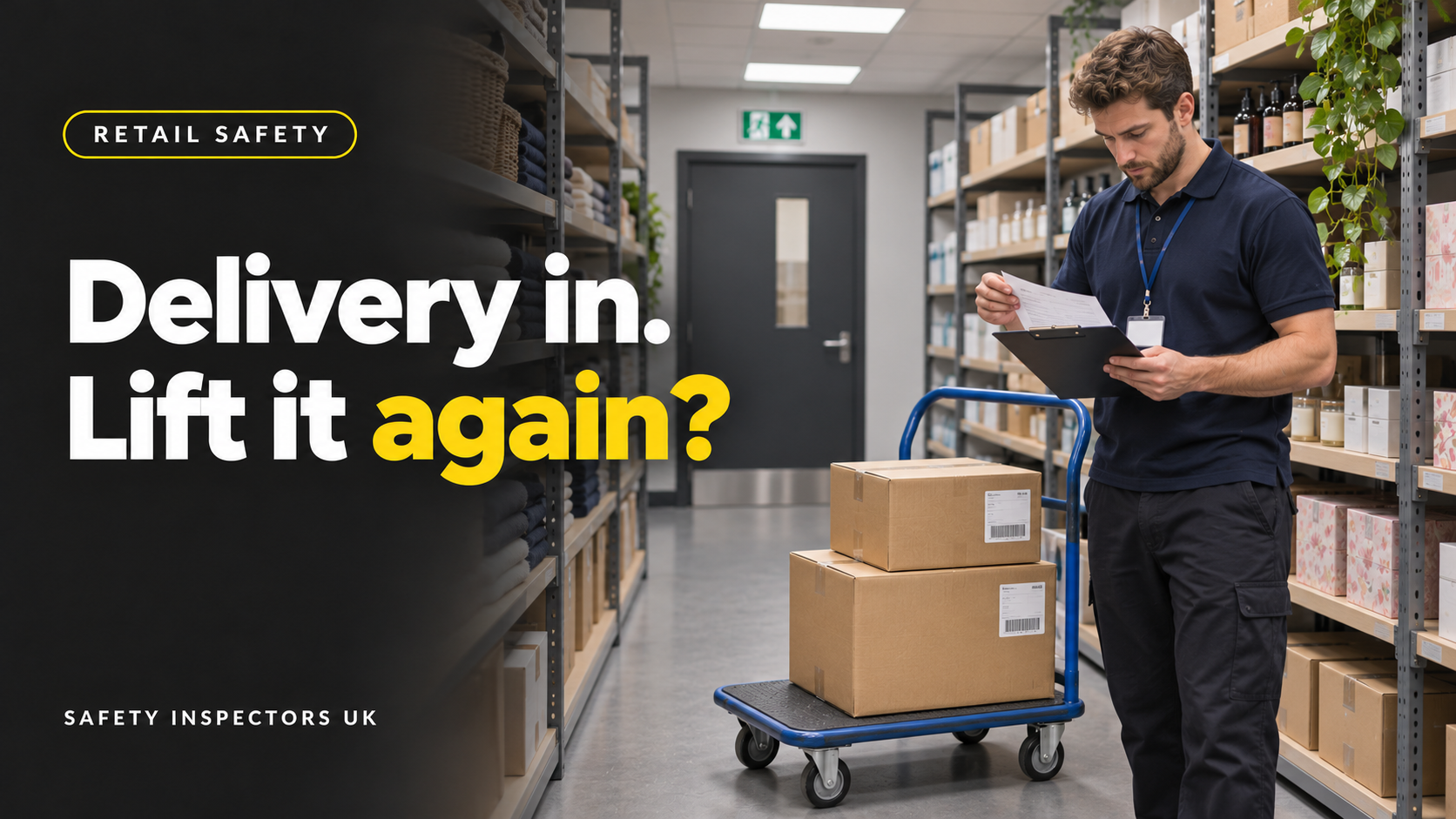
One carton. Several lifts. Before you book another manual handling refresher, count how many times your team touches the same stock.
For shop owners and retail managers in Hartlepool, safer delivery handling starts before the goods arrive. The useful question is not simply whether someone can lift a box. It is whether your delivery, storage and replenishment arrangements make them lift it unnecessarily.
Retail delivery manual handling: follow one carton
Watch a normal delivery from arrival to final storage. Record each lift, carry, push and temporary set-down. Ask staff where the job becomes awkward, especially when the shop is busy or the usual delivery lead is absent.
A carton left beside the back door may be moved again to clear the route, again to make space for the next delivery, and once more for replenishment. Consider whether a planned receiving position and an agreed destination would remove those extra moves.
In Great Britain, the approach is to avoid hazardous manual handling so far as reasonably practicable, assess what cannot be avoided, and reduce the remaining risk as low as reasonably practicable. HSE’s manual handling overview explains this hierarchy. It covers pushing and pulling as well as lifting.
Start with the order and delivery agreement
Ask the supplier about smaller packs, clearer weight information or a delivery arrangement that reduces handling at your premises. A lower unit price can lose its appeal if the packaging creates an awkward job every week.
Check where goods will actually be left, what handling equipment is available and who will receive them. Do not assume the driver will carry stock into your store. Plan an alternative when the agreed receiving space or equipment is unavailable.
HSE’s risk-reduction guidance includes smaller loads, shorter carrying distances and changes to work rates. Use those options to improve the task before relying on individual lifting technique.
A trolley helps only if the route works
Check the whole journey: door widths, thresholds, tight turns, floor condition and the place where stock is unloaded. A trolley that fits the stockroom but cannot pass through its doorway may simply create another handling stage.
Choose equipment suitable for the load and route, follow its instructions and keep it in good condition. Avoid loading it so high that the person moving it cannot see ahead. Pushing and pulling still need assessment; wheels do not automatically make a task safe.
Consider the task, load, environment and individual capability. HSE’s assessment guidance also points to tools for lifting, carrying and pushing or pulling where a closer assessment is needed.
Too many lifts between delivery and shelf?
SIUK can help review the task, identify handling risks and prioritise practical changes to your working arrangements.
Make storage decisions before the space fills up
Keep frequently handled, heavier stock in positions that reduce awkward reaching and lifting from floor level, while respecting shelving capacity and stability. Leave enough room to approach and handle the load. A full stockroom needs an ordering or storage decision, not an instruction to squeeze through.
Include replenishment and returns in the review. Moving damaged goods, empty containers or unsold stock can be just as awkward as receiving a delivery. Ask staff to report discomfort early and review the work when they do.
Before the next delivery: five decisions
- Destination: where will each type of stock go without unnecessary intermediate moves?
- Equipment: is the suitable trolley or handling aid available, serviceable and usable throughout the route?
- People: who receives the goods, and what happens during breaks or absences?
- Exceptions: who decides what to do with an oversized, unstable or unexpectedly heavy load?
- Follow-up: who owns each improvement, by when, and who checks it works on the next delivery?
Record the decisions in your assessment and working instructions. Brief the people doing the job, including temporary staff, and check the arrangement in use.
Questions shop managers ask
Is there a legal maximum lifting weight?
No universal legal weight limit makes a lift safe. Weight matters, but so do grip, posture, frequency, distance and the person doing the work. Avoid treating a single kilogram figure as permission to proceed.
Will a training certificate cover us?
Training alone does not ensure safe handling. HSE recommends task-relevant instruction and practical work, alongside safer task design and checks that procedures are understood. SIUK’s in-person manual handling training can support the arrangements you put in place.
Make the next delivery easier to handle.
Running a retail business in Hartlepool? Tell us what arrives, where it goes and which part of the job causes difficulty. We can discuss a manual handling risk assessment review and practical training suited to your team.
Sources checked: 6 November 2026. HSE guidance linked above. This practical guide supports, rather than replaces, assessment of your own tasks and premises.