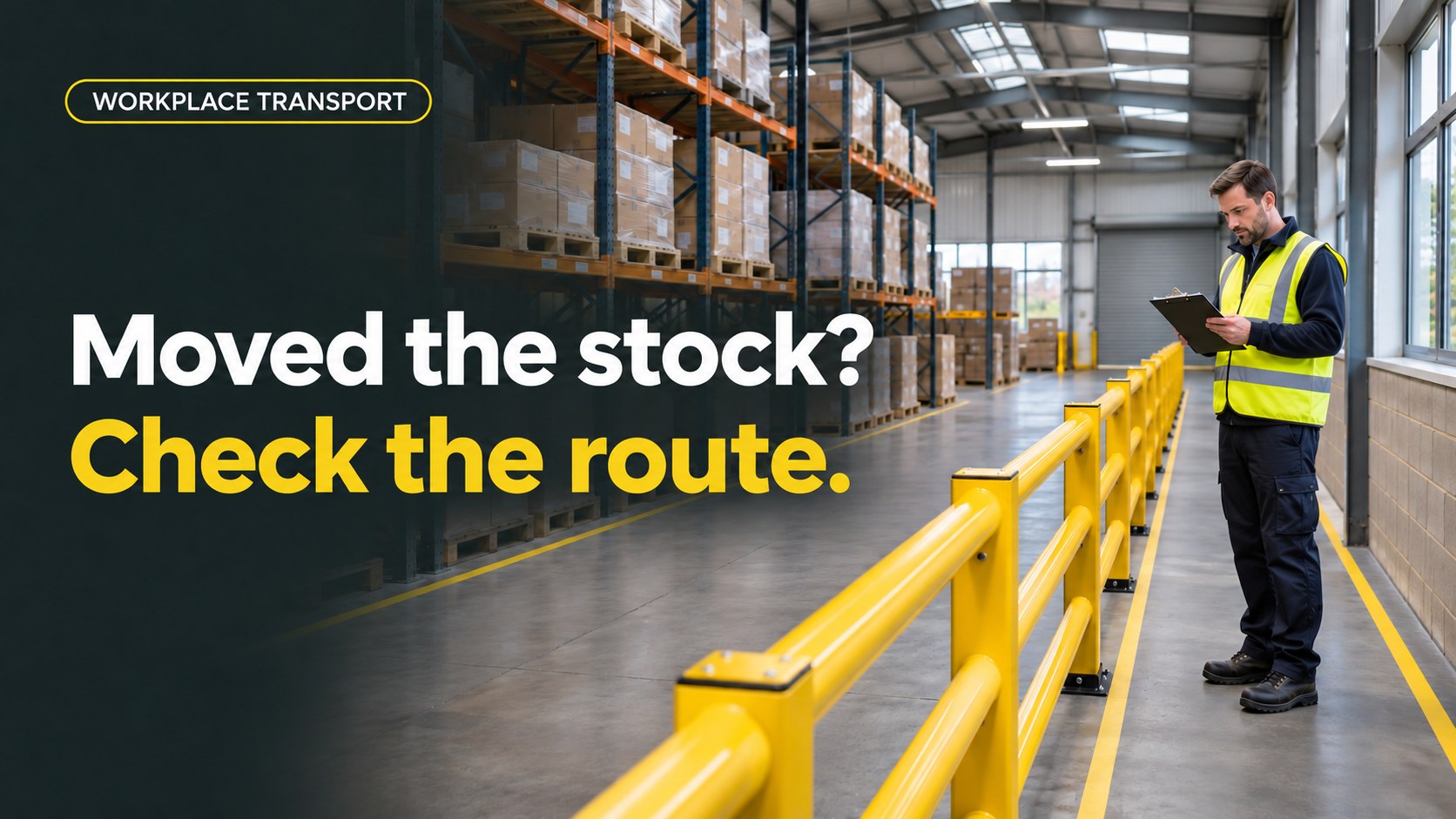
Warehouse traffic routes in Gateshead · Safety Inspectors UK · 5 minute read
A few pallets move. A walkway narrows. Two trucks now meet at a blind corner.
Nobody set out to redesign the warehouse. But the way people and vehicles move through it has changed.
For Gateshead warehouse and logistics managers, reviewing warehouse traffic routes is part of managing stock, deliveries and installation work. Checking the change before it goes live can prevent a temporary arrangement becoming an everyday collision risk.
A temporary change. A permanent consequence.
On 23 October 2026, HSE reported a prosecution following a warehouse collision in Barnsley. The incident happened on 14 November 2024, when a ride-on pallet truck collided with a forklift during installation work.
HSE found that altered routes brought both types of truck into the same busy loading area, with restricted visibility and increased movements. The effect of the changes had not been properly risk assessed. Leggett & Platt Components Europe Limited was fined £80,000 at a hearing on 20 October 2026.
The HSE prosecution report makes the management lesson clear: assess the knock-on effects of a project, including traffic arrangements outside the immediate work area.
Review warehouse traffic routes before moving the first pallet
Start with a simple marked-up layout. Show picking areas, dispatch, pedestrian entrances, welfare facilities and delivery-driver waiting points. Add the proposed storage or work area. Then trace each journey that the change will affect.
Ask the forklift operator, order picker and shift supervisor to walk through the proposal with you, with vehicle movements stopped or safely segregated. Does a blocked aisle push trucks towards a pedestrian doorway? Will a temporary stack hide someone approaching a crossing? Does moving returns stock create extra trips through dispatch?
In Great Britain, employers must assess workplace transport risks and take appropriate precautions. HSE’s transport risk-assessment guidance says to assess risks before significant changes and keep the assessment aligned with actual working practices. Involve affected employees; do not wait for the next annual review.
Make separation work on a busy shift
Separate pedestrian and vehicle routes wherever possible. A painted line can identify a walkway, but it cannot physically stop a truck entering it. Consider suitable barriers and protected crossing points where the assessment shows they are needed.
Make the pedestrian route practical. If staff must take a long detour to reach the packing bench or toilets, look again at the layout instead of relying on repeated reminders. Include cleaners, contractors and visiting drivers in the review.
HSE’s guidance on separating people and vehicles covers routes, crossings and communication. High-visibility clothing supports visibility; it does not create separation.
CHANGING THE LAYOUT?
Check the impact beyond the moved stock.
SIUK’s health and safety inspections can help you identify practical concerns, review how work is organised and prioritise improvements before a temporary arrangement becomes routine.
Explore workplace inspections ↗Check visibility, space and the delivery handover
Assess the route with the largest vehicles and loads that will actually use it. Allow for turning, parked vehicles and loading activity. A clear aisle during an empty-site inspection may look very different once dispatch fills up.
Avoid blind bends where possible. Keep sightlines clear and check lighting at junctions, entrances and loading areas. HSE’s safe workplace layout guidance also recommends one-way systems where practicable.
Tell visiting drivers where to stop, report and wait before unloading begins. If a loading area changes, update the instructions used by the office as well as the warehouse team. Check that pedestrians are not being redirected into vehicle movements.
Five checks before the changed route opens
- Identify every user. Include pedestrians, different truck types, delivery drivers and contractors.
- Check every meeting point. Review crossings, doorways, reversing areas and places with restricted visibility.
- Put controls in place. Install agreed separation, signs and access arrangements before use.
- Brief every affected shift. Show the route, explain restrictions and check understanding, including agency staff.
- Name the owner and review point. Check the first operating shift from a safe position, resolve concerns and agree when temporary arrangements end.
If the route cannot be used safely, keep the affected activity stopped while the arrangement is corrected. Record the decisions in your site assessment and action plan.
Questions warehouse managers ask
Does moving stock always need a new assessment?
Not necessarily a completely new document. Review the existing assessment against the proposed change and update what is affected. The question is whether the current controls still cover the work people will actually do.
What if the alternative route lasts one shift?
Its duration does not remove the risk. Decide the controls before use, make the handover clear and check that the normal route is safe when reinstated.
PRACTICAL SUPPORT FOR YOUR BUSINESS
Make the next layout change a managed one.
Running a warehouse or logistics business in Gateshead? Tell SIUK what is changing and where vehicle movements are causing concern. We can discuss a workplace inspection and the practical actions your team needs to follow through.
Request a warehouse safety review ↗Call 0330 1226 337 · Email your enquiry
For ongoing reviews and help keeping actions on track, explore retained health and safety support.
Sources checked: 2 November 2026. HSE guidance and the prosecution report are linked beside the relevant advice. Apply this guide alongside your site-specific risk assessment.