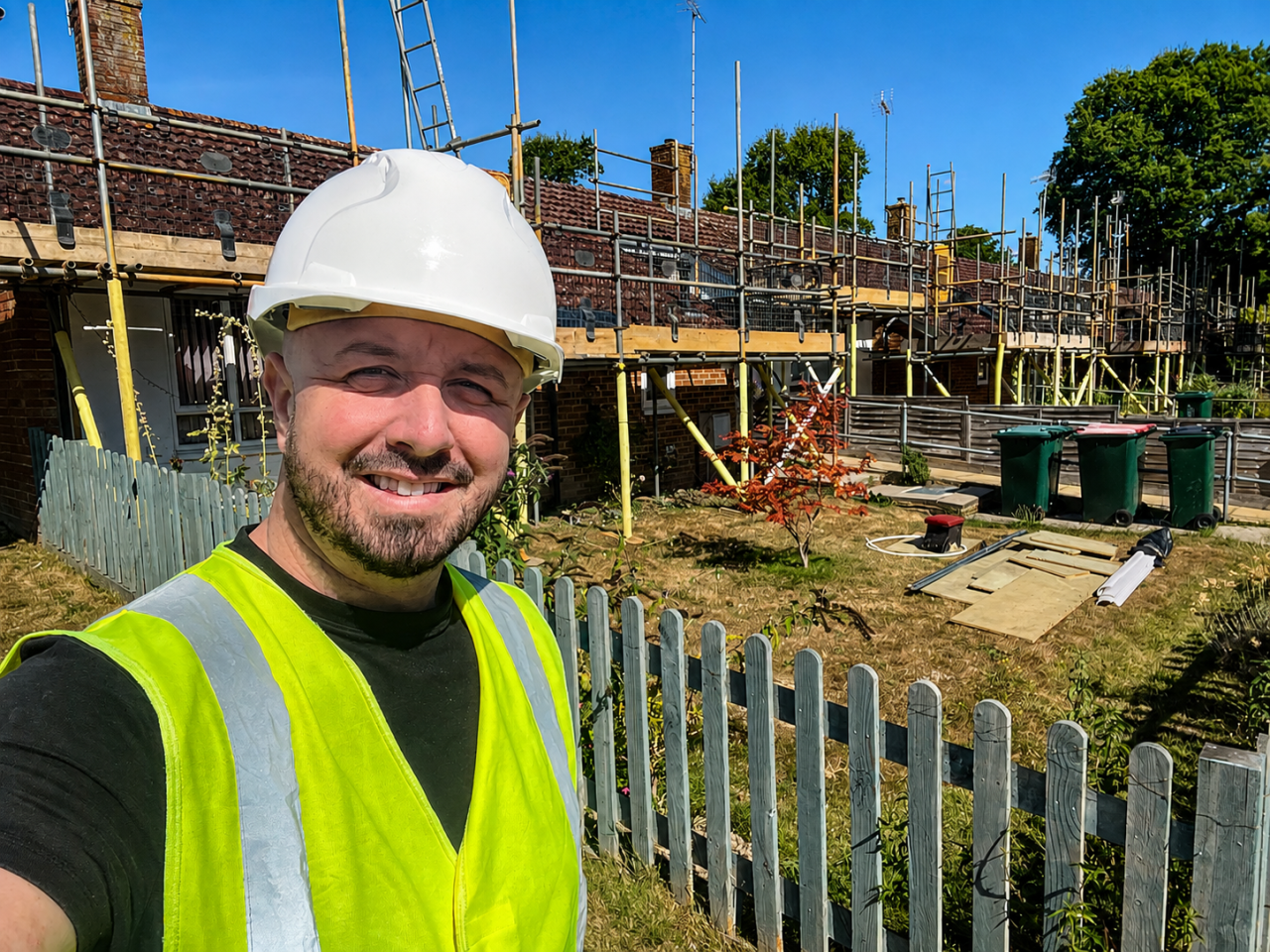
Health & safety beyond the desk
Real health and safety is measured on site—not by the size of the folder.
RAMS set the plan. Practical site visits reveal whether the controls are understood, workable and protecting people when the work begins.
Today’s site visit at a glance
Where: Live construction and refurbishment sites
What: Practical health and safety site inspections
Focus: Comparing planned controls with the work taking place
Approach: Observe, speak with people, identify gaps and agree action
Outcome: Safer work, clearer expectations and evidence of active management
Today was a site day—because effective health and safety consultancy cannot be delivered entirely from behind a desk.
I was out visiting live sites, seeing how work was being delivered and checking whether the arrangements described in the RAMS, risk assessments and safe systems of work made sense in practice.
The paperwork matters. It gives people a plan, establishes expectations and records how significant risks should be controlled.
But the paperwork is only the starting point. A document cannot always show how the site has changed, how different trades are interacting, whether access remains suitable or whether the planned control can genuinely be followed by the people doing the job.
If the paperwork says one thing and the site does another, the site wins every time.
The answer is not another generic document. It is to understand the gap, correct it and make sure the written arrangements reflect the real work.
RAMS are essential. They are not enough on their own.
A well-written risk assessment and method statement should be clear, proportionate and relevant to the work. It should help the team plan the task and understand the controls expected of them.
However, even strong RAMS cannot provide complete assurance unless somebody checks how they are being applied. That is where health and safety site inspections, supervisor engagement and practical follow-up become essential.
Paperwork alone may not reveal:
- Changes to access routes, work areas or the planned sequence.
- Materials, waste or equipment creating new obstructions.
- Several contractors working close to one another.
- Controls that are unclear, impractical or being interpreted differently.
- Residents, visitors or members of the public entering the work area.
- A change in equipment, staffing, weather or site conditions.
- Good ideas from operatives that could make the work safer and simpler.
The goal is not to catch people out.
The goal is to identify problems early, help people understand what good looks like and keep the job moving without exposing workers, residents, customers or the business to avoidable risk.
What a practical health and safety site inspection looks for
The exact focus changes with the workplace, activity and level of risk. A useful inspection looks beyond obvious hazards and considers the whole system around the work.
Inspection area 01
The planned work
Do the RAMS reflect the actual task, people, equipment, work sequence and surroundings? Have important changes been identified, communicated and recorded?
Inspection area 02
The physical site
This can include access, housekeeping, storage, work at height, scaffolding, plant, tools, PPE, welfare, emergency arrangements and protection from unauthorised entry.
Inspection area 03
The people affected
Good construction health and safety management considers operatives and subcontractors, but also residents, customers, visitors, neighbouring businesses and members of the public.
Inspection area 04
The management response
An inspection should produce clear actions, responsible owners and sensible timescales. Findings need to be followed through rather than left in another report nobody revisits.
What integrated health and safety support really means
Integrated support means the policies, risk assessments, RAMS, training, site inspections and management decisions work together. It creates a simple feedback loop between what the business intends to happen and what is actually happening.
Step 01 — Understand
Learn the business, the work, the people and the operational pressures.
Step 02 — Plan
Create proportionate risk assessments, RAMS and arrangements relevant to the work.
Step 03 — Observe
Visit the workplace and see how the controls are being applied in practice.
Step 04 — Improve
Correct gaps, update documents and make the safe approach easier to understand.
Step 05 — Evidence
Record findings, ownership, timescales and confirmation that actions were completed.
Plan it. See it. Improve it. Evidence it.
What businesses gain from hands-on health and safety support
Practical site involvement is not an added extra. It is how a business tests whether its health and safety management system is working.
- Fewer surprises: issues can be identified before they become incidents, delays or client complaints.
- Better RAMS: documents improve because they are informed by real work rather than generic assumptions.
- Clearer accountability: actions have named owners, timescales and visible follow-up.
- More engaged workers: people are involved in finding practical solutions instead of being handed instructions without context.
- Stronger evidence: the business can show that it actively plans, monitors and reviews its arrangements.
- Safer delivery: work can continue with sensible controls and less avoidable disruption.
Backed by HSE guidance
Check whether the controls are actually working.
The Health and Safety Executive says businesses should review the controls they have put in place to make sure they are working and revisit them when workplace changes could create new risks.
HSE guidance also highlights the value of involving employees because the people doing the work are often best placed to understand workplace risks and identify practical solutions.
Read HSE guidance on reviewing risk controls
Read HSE guidance on worker involvement
Health and safety site inspections: common questions
What is a health and safety site inspection?
It is a structured review of the workplace, work activities and management arrangements. It checks hazards, control measures, behaviours, documentation and whether agreed actions are being completed.
Does having RAMS remove the need for site inspections?
No. RAMS explain how work is intended to be completed, while site inspections help confirm that the controls remain suitable and are being followed in changing real-world conditions.
How often should a workplace or construction site be inspected?
The frequency should reflect the level of risk, pace of change, type of work, previous findings and client requirements. Higher-risk or rapidly changing work normally requires more frequent monitoring.
Can Safety Inspectors UK provide one-off and retained support?
Yes. Safety Inspectors UK provides one-off health and safety inspections, RAMS reviews and ongoing retained health and safety support for businesses that need regular competent advice and practical site involvement.
Practical health and safety support for UK businesses
Safety Inspectors UK supports contractors, property businesses, motor dealerships, offices, hospitality venues and other employers through practical, proportionate health and safety consultancy.
- Retained health and safety support.
- Workplace and construction site inspections.
- RAMS development, review and improvement.
- Risk assessments and safe systems of work.
- Accident, incident and near-miss investigation.
- Health and safety policies, procedures and action plans.
- Manager, supervisor and workforce health and safety training.
One-off inspections and retained health and safety support
When did your health and safety adviser last see the work?
If your current support ends with generic templates and email replies, you may be paying for paperwork rather than practical protection. Get health and safety support that works in your business and on your sites.
Discuss your health and safety requirements
Call 0330 1226 337 or email help@safetyinspectors.co.uk.