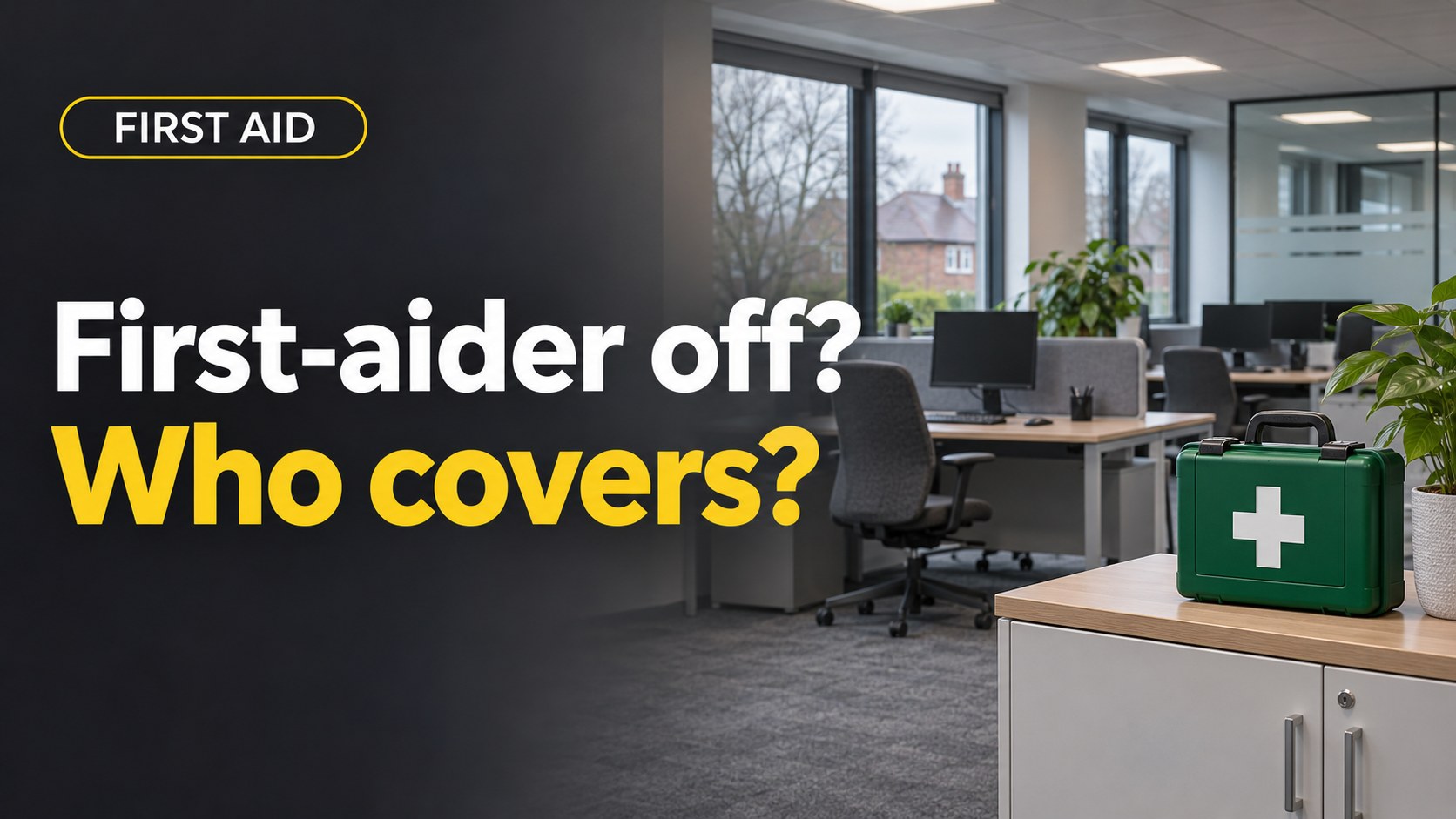
Office first-aid cover in Darlington · A practical management guide
Your first-aider is on leave. Their backup is working from home. The office is still open.
The certificates may be in date. The first-aid box may be stocked. But who is actually available to help? For office managers in Darlington, checking first-aid cover means looking at the working week as well as the training record.
Hybrid days, part-time hours, client appointments and annual leave can all change who is in the building. A short review can reveal gaps before the next absence creates a problem.
Start with your office first-aid needs assessment
In Great Britain, employers must provide adequate and appropriate first-aid arrangements for employees. HSE’s employer guidance explains that the assessment should consider the work, workforce, hazards, working patterns and absences. There is no single staffing ratio that answers every workplace’s needs.
An accountancy practice with a reception area, meeting rooms and staff visiting clients may have different arrangements from a large office spread across several floors. Consider early arrivals and late finishes, not just the busiest part of the day.
Where the assessment shows that a trained first-aider is unnecessary, an appointed person takes charge of arrangements, including equipment and calling emergency services. That role does not require formal first-aid training. Where trained first-aiders are needed, provide enough suitably trained people to meet that need.
Check office first-aid cover against the rota
Put the attendance rota beside the first-aid record. For each working day, identify the people available, their hours and the area they cover. Then repeat the check with the main person absent.
Try a Monday when one colleague is on leave and another has a morning client meeting. Or a Friday when most staff leave early but reception remains open. A manager should be able to explain the arrangement for each situation without relying on someone “probably being around”.
HSE’s first-aid questions and answers specifically includes cover for planned and unexpected absences, work outside normal hours and the layout of the premises.
A useful record can be simple: day or time period, required provision, named cover, backup arrangement and any action needed. Keep sensitive health information out of a general staff rota.
Annual leave needs planned cover
An appointed person is not a routine replacement for a required trained first-aider who is on holiday. HSE’s L74 guidance, paragraph 81, distinguishes emergency cover during exceptional, unforeseen and temporary absence from planned annual leave.
Resolve predictable gaps before the leave starts. That may mean training additional suitable staff, agreeing attendance arrangements or arranging appropriate shared cover. If someone calls in sick, check the fallback promptly and review whether the remaining arrangements still meet the assessed need.
Do not treat someone answering a phone from home as equivalent to a first-aider who can attend the office promptly.
FOUND A GAP IN THE ROTA?
Train the people who can provide the cover.
SIUK offers Emergency First Aid at Work and First Aid at Work courses. Share your workplace needs, learner numbers and preferred dates so we can discuss a suitable training arrangement.
Explore first-aid training ↗Five checks before the next absence
- Review the need. Check whether work, staff numbers, occupied hours or the office layout have changed.
- Check real availability. Include leave, hybrid days, client visits, breaks and part-time hours.
- Confirm competence. Check the training level and renewal dates of the people providing trained cover.
- Check access. Make sure the kit and any other assessed equipment can be reached when needed.
- Tell the team. Update contact details and explain who takes charge when the usual person is away.
Give each gap an owner and completion date. Recheck the arrangement when attendance patterns change, rather than waiting for the next course renewal.
Do we need EFAW or FAW?
Use the needs assessment to choose the training level and number of people. HSE explains that EFAW covers emergency first aid, while FAW also covers a wider range of specific injuries and illnesses. An office address alone does not decide the course.
Plan training dates around existing cover too. Sending every first-aider on the same course day can create the very gap you are trying to close.
PRACTICAL SUPPORT FOR DARLINGTON OFFICES
Make the next absence easier to cover.
Tell SIUK how your office operates and where cover is uncertain. We can discuss first-aid training and support with reviewing your workplace arrangements. Ongoing retained health and safety support can help keep agreed actions moving.
Discuss your first-aid cover ↗Guidance checked: 3 November 2026. HSE sources are linked beside the relevant advice. This guide addresses workplace arrangements in Great Britain.