Contractor safety management for Newcastle property teams · 6 minute read
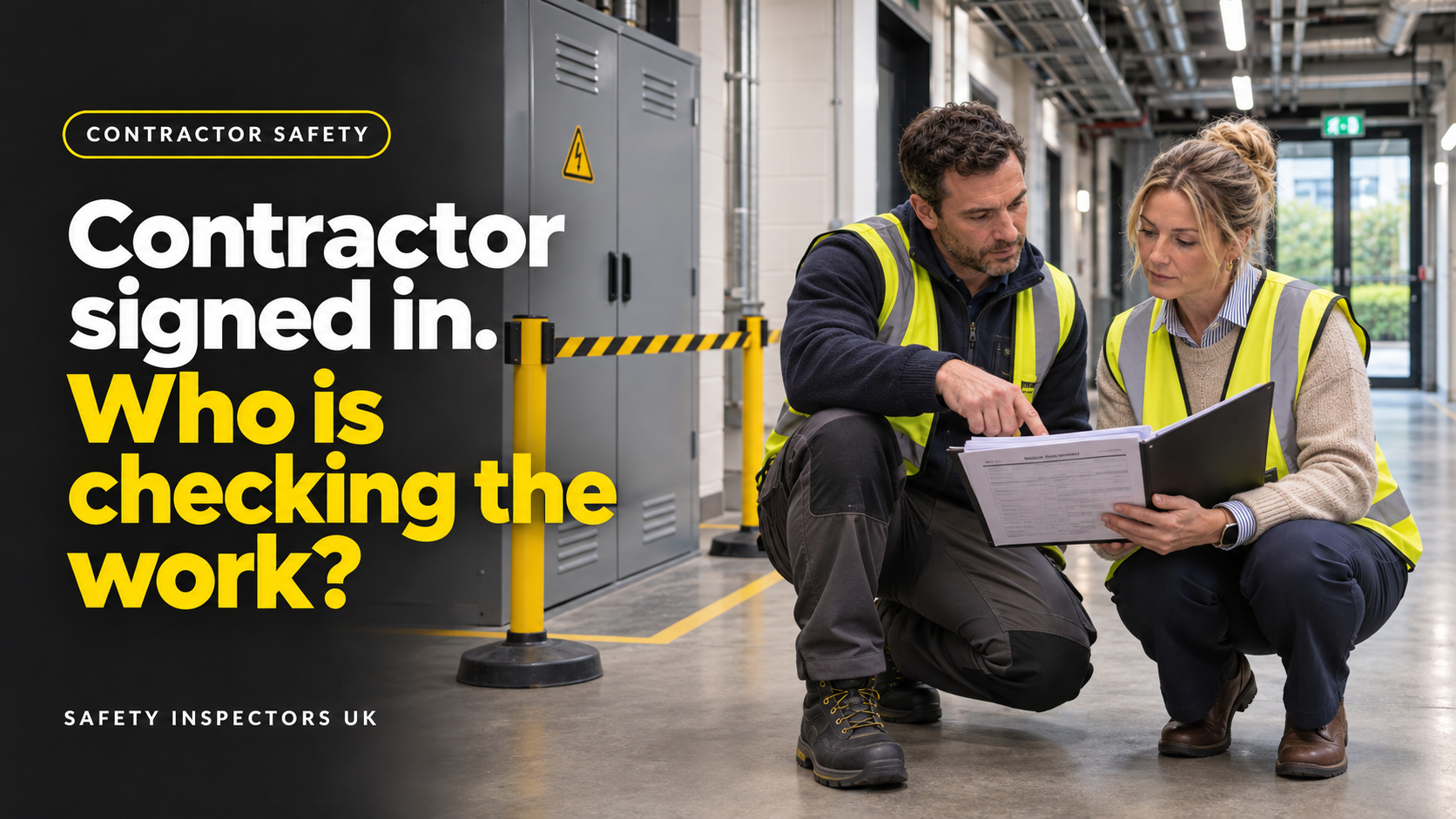
The contractor has signed in.
The RAMS are in a folder.
Work starts behind a closed door.
Then a tenant walks through the work area, an alarm is isolated, a ceiling tile comes down or the job changes — and nobody on site knows who approved it.
For property and facilities managers in Newcastle, contractor safety management is not a paperwork collection exercise. It is the practical job of deciding who can do the work, what they need to know, how their activity affects an occupied building and who checks the controls are working.
You can outsource the job. Not the oversight.
Both the client and the contractor have health and safety responsibilities. HSE’s guide to using contractors sets out the shared work: define the job, select a suitable contractor, exchange information, assess the risks, cooperate, manage and supervise.
In Great Britain, section 3 of the Health and Safety at Work etc. Act 1974 requires an employer to conduct its undertaking so far as reasonably practicable without exposing people outside its employment to health and safety risks. Where employers share a workplace, regulation 11 of the Management of Health and Safety at Work Regulations 1999 requires cooperation, coordination and information about risks.
That matters in a managed office, retail unit or mixed-use property. The contractor knows their trade. You know the building, occupants, access arrangements and other work taking place. Safe delivery depends on joining those two sets of knowledge.
Define the job before asking for RAMS
“Attend site and fix the problem” is not a useful scope. Clarify the task, location, timing, access, equipment, substances, isolations and expected handover. Decide whether the building will remain occupied and who could be affected.
Give the contractor relevant site information before they price or plan the work. This may include the asbestos register, emergency arrangements, known services, permit rules, fragile surfaces, restricted areas, tenant needs and simultaneous work. Do not assume a short visit means a low-risk job.
Choose for the task, not the logo on the van
Check that the business has the skills, knowledge, experience and resources for this job. Ask who will actually attend, whether subcontractors are involved, what evidence is relevant and how supervision will work. A generic accreditation can support selection; it does not answer every task-specific question.
RAMS should fit the task and the premises.
Turn contractor paperwork into a workable plan.
SIUK can help review the task, risk information and practical site arrangements before work starts — including what needs clarifying with the contractor.
Explore risk assessments & RAMS ↗Good RAMS must survive contact with the building
A polished document can still miss the main interface risk: occupants moving through the area, a shared fire route, an isolation affecting another tenant or a delivery arriving while access equipment is in place.
Read the sequence, not just the hazard table. Can the team work as described? Is the equipment available? Are barriers, permits, isolations and emergency arrangements clear? Who stops the task if the location, people or method changes?
If the method does not match the site, resolve it before work starts. Asking someone to sign a document they have not understood is not a control.
Control the day, not just the booking
Name a site contact. Give a proportionate induction. Confirm emergency arrangements, welfare, access, work boundaries, permits and how the area will be left. Tell affected staff or tenants what they need to know without circulating unnecessary technical paperwork.
Supervision should match the risk and the contractor’s familiarity with the site. It may mean a start-of-work check, scheduled checks and a proper close-out rather than standing beside a competent specialist all day.
When the job changes, pause. New equipment, a different route, an unexpected material or an extra subcontractor can invalidate the original plan. Agree the change, update the controls and communicate it before continuing.
Check whether CDM applies
Where the job is construction work — for example refurbishment or alteration — the Construction (Design and Management) Regulations 2015 add specific duties. HSE’s commercial client guidance explains the need for suitable management arrangements, sufficient time and resources, and relevant pre-construction information. Do not treat CDM as something that starts only on a large building site.
A seven-point contractor check
- Scope it. State exactly what is being done, where, when and by whom.
- Select properly. Check competence and resources against the actual task.
- Share information. Provide relevant building, occupancy and emergency details.
- Test the plan. Check that the RAMS match the site and work sequence.
- Control interfaces. Coordinate tenants, staff, deliveries and other contractors.
- Monitor proportionately. Check critical controls and respond to changes.
- Close out. Confirm the area is safe, systems are restored and defects or follow-up actions are recorded.
HSE’s guidance on shared workplaces reinforces the need for employers to cooperate, coordinate their measures and exchange risk information.
Questions property managers ask
Are RAMS always a legal requirement?
There is no single legal rule requiring every job to have a document labelled “RAMS”. Employers and contractors still have risk-assessment duties, and a clear method statement can be important for complex or higher-risk work. The documentation should be proportionate and useful.
Can a competent contractor manage everything?
They should manage their people and work, but you still need to provide relevant site information, coordinate the building and check agreed arrangements. Each party retains its own duties.
How much supervision is enough?
It depends on the risk, the people, the premises and the contractor’s familiarity with the work. Agree critical hold points and checks before starting, then increase oversight if the work or conditions change.
PRACTICAL SUPPORT FOR YOUR PROPERTY
Know what is happening behind the closed door.
If you manage commercial property or facilities in Newcastle, SIUK can inspect workplace arrangements, review contractor controls and help turn findings into clear actions.
Explore workplace inspections ↗Call 0330 1226 337 · Send a service enquiry
Need ongoing help with contractor reviews and action tracking? Explore our retained health and safety support.
Guidance checked: 9 November 2026. Key sources: HSE contractor guidance, HSE shared-workplace guidance, the Health and Safety at Work etc. Act 1974, the Management of Health and Safety at Work Regulations 1999 and HSE CDM client guidance. Sources are linked beside the relevant advice. This article applies to Great Britain and should be used alongside an assessment of the particular premises and work.