CONSTRUCTION · NORTH EAST · PRACTICAL SAFETY
The scaffold is going up. Another trade wants to get started. “We only need five minutes.”
That is the moment to stop and check who can access it, which areas are ready and who is controlling the work. An unfinished scaffold can look usable from the ground while the arrangements needed to protect people are still being installed.
For construction and refurbishment managers across Teesside and the North East, the useful question is simple: could someone get onto a section that has not been released for their use?
A recent case with a clear lesson
On 6 November 2026, HSE reported a prosecution following the death of trainee scaffolder Michael Swales. He fell five metres from a partially erected scaffold at a housing development near Ripon on 5 July 2023. HSE reported that safe zones had not been established and workers were not using harnesses or lanyards.
Ask Scaffolding Ltd was fined £16,000 at Leeds Magistrates’ Court on 4 November 2026. This was enforcement of an existing duty, not a new scaffolding law. Read HSE’s account of the case.
The case concerns protection during erection. It also prompts a wider management check: how do your arrangements change while a scaffold is being built, altered or dismantled?
Scaffolders working is not permission for everyone else
HSE says erection, alteration and dismantling must be carried out by competent people under competent supervision. Trainees must work under a trained, competent scaffolder. The priority is collective fall protection, reducing reliance on personal fall protection.
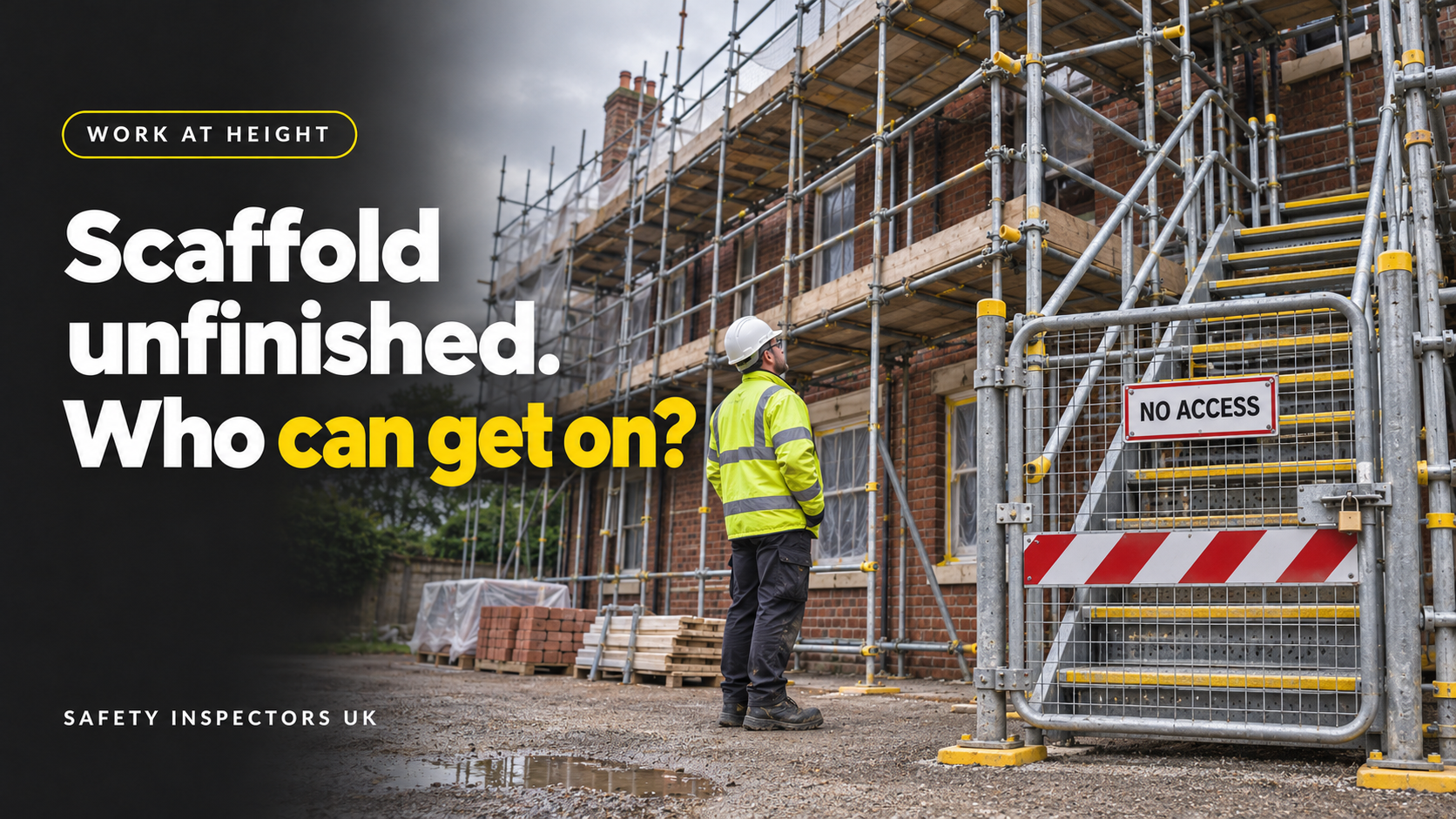
Where a scaffold is unavailable for use, HSE calls for warning signs and physical measures preventing access to the danger zone. A contractor working on the structure does not make it available to other trades. See HSE’s scaffolding guidance.
Consider a refurbishment where the scaffold contractor returns to change an access arrangement. The decorator arrives using yesterday’s briefing. Unless somebody closes the affected access and tells the decorator what has changed, both teams may be working from different assumptions.
A useful site briefing names the affected area, the restriction, the person controlling access and the condition that must be met before work restarts. “Speak to the scaffold contractor” is clearer when everyone knows exactly who that is.
Do the site arrangements match the paperwork?
SIUK’s retained health and safety support can include agreed site visits, RAMS reviews and action follow-up. We help managers turn documented controls into clear working arrangements.
Discuss your site safety arrangementsStart with preventing the fall
HSE’s work-at-height approach is to avoid the work where reasonably practicable, prevent falls where it cannot be avoided, and minimise their distance and consequences where risk remains. Measures protecting everyone take priority over measures depending on individual action.
Work must be planned, supervised and undertaken by competent people. Equipment selection, safe access and rescue arrangements belong in that planning. A harness is not a stand-alone answer to an incomplete working method. Read HSE’s introduction to working at height safely.
Five questions for the next site briefing
- What is happening today? Identify erection, alteration or dismantling, rather than assuming yesterday’s arrangements still apply.
- Which access points are affected? Walk the approaches and check whether another trade could enter unintentionally.
- Who controls the change? Name the scaffold contact and the site person coordinating other trades.
- Who needs a fresh briefing? Include later arrivals and anyone who missed the morning discussion.
- What permits the restart? Agree the required confirmation and checks before removing restrictions.
Record the answers against the actual scaffold and work area. A generic “scaffold checked” entry gives the next supervisor very little to work with.
Does handover end the checks?
No. HSE identifies inspection before first use, at intervals not exceeding seven days, and after circumstances liable to affect safety, such as high winds. Inspection must be undertaken by someone competent for the scaffold’s type and complexity.
A handover record helps establish the starting position. Managers still need a clear way to report damage, unauthorised changes or a new concern, and to stop use where necessary.
Make the next decision easier
If responsibilities, briefings or follow-up actions are unclear, we can help review your wider site safety arrangements. Specialist scaffold design and inspection require the appropriate scaffold competence; general consultancy does not replace that role.
Request practical health and safety supportSources checked: 12 November 2026. Guidance discussed applies to Great Britain. Cover: AI-generated scene, not a photograph of the reported incident.