Managing customer aggression in shops · 5 minute read
“Call the manager” is only useful if someone answers—and the employee knows what to do while they wait.
A disputed refund, a refused sale or an angry queue can leave a shop assistant dealing with aggression while colleagues are elsewhere. Managers need to decide in advance how staff can end an unsafe interaction, move away and get support.
For independent retailers across the North East, this starts with the actual shop layout and shift pattern. A policy in the office needs to translate into something the person at the till can use.
Treat threats and abuse as a safety issue
HSE’s retail guidance includes verbal abuse, threats and physical attacks within work-related violence. Staff should not have to wait for an injury before a concern receives attention.
HSE explains the legal duties to assess work-related violence risks and protect workers so far as reasonably practicable. Employers must also provide appropriate information and training and consult workers. These are existing Great Britain health and safety duties; this guide does not announce a new retail law.
Find the situations staff already worry about
Use HSE’s risk-assessment approach: ask workers, observe the workplace and review incident records. Look at when trouble occurs, what starts it and who may be particularly exposed. Include new starters and temporary workers in those conversations.
Ask specific questions: Which transactions cause arguments? Does someone cover the till when a supervisor is in the stockroom? Can staff see a developing problem from their normal position? Are closing arrangements different from the daytime routine?
Our practical suggestion is to walk through one difficult transaction with the team during a quiet period. Identify the point where the employee should stop handling it alone. Record the answer in plain language, alongside the action needed to make support available.
Make the response possible from behind the till
HSE’s prevention guidance covers working arrangements and training matched to the risks. Choose controls for your premises; a camera, sign or training certificate is not a complete response plan.
Agree a simple way to summon assistance, who responds and the fallback if that person is unavailable. If you rely on an alarm, check where it can be reached, who receives it and what they are expected to do. Include breaks and staff changes.
Show staff where they can move away safely. Keep that route clear and consider whether the checkout layout traps someone behind a customer. Make clear that protecting people takes priority over continuing a transaction or recovering goods. Avoid instructions that expect untrained staff to confront or physically restrain an aggressive person.
Check what happens on a real shift
SIUK’s workplace inspections can help you review practical arrangements, identify gaps and prioritise improvements with your team.
Explore health and safety inspections →Review the shop, not just the employee’s reaction
HSE’s retail examples show how visibility, lighting, checkout design, security arrangements and staffing can contribute to prevention. They are examples to consider, not a shopping list that every retailer must install.
Look for avoidable friction: unclear refund information, queues with no explanation, or restricted goods positioned where a dispute brings someone into the employee’s space. Consider changes with staff and suitable security advice where needed. Do not introduce barriers that obstruct escape or simply move the risk to another part of the shop.
Brief workers on the actual arrangements, including how to disengage and call for help. Rehearse a calm handover rather than asking employees to improvise under pressure.
Make reporting lead to a visible response
HSE recommends simple reporting and support after incidents. A short account of what happened, when and who was involved is a useful starting point. Include threats and verbal abuse, not only injuries.
Check immediate welfare, offer appropriate support and speak to witnesses sensitively. Review whether staffing, layout or procedures need changing. Tell staff what action has followed their report without sharing unnecessary personal information.
Internal reporting is separate from statutory reporting. Some injuries caused by work-related violence are reportable under RIDDOR; check HSE’s criteria rather than assuming every abusive exchange is reportable, or that none are. Police reporting is a separate consideration.
Five questions before the next shift
- Who takes over? Name the available responder and the fallback during breaks.
- Can staff reach help? Check the agreed assistance method from the places people actually work.
- Where can they step back? Walk the route and remove obstructions.
- Do new starters know the limits? Explain when to end an interaction and how to report it.
- What changed after the last concern? Give outstanding actions an owner and a review date.
Use these questions alongside your risk assessment. Start with the weakest answer today, agree the improvement and check with staff that it works.
Give your team a workable plan
If customer aggression is causing concern in your North East shop, tell us where your arrangements are falling short. We can discuss a workplace review and practical safety support.
Request safety support ↗For ongoing help with actions and responsibilities, explore retained safety services.
Sources checked: 14 November 2026. Current HSE guidance is linked beside the relevant advice. National guidance applies across Great Britain; local relevance does not change those duties. This is an evergreen management guide, not a report of a local incident.
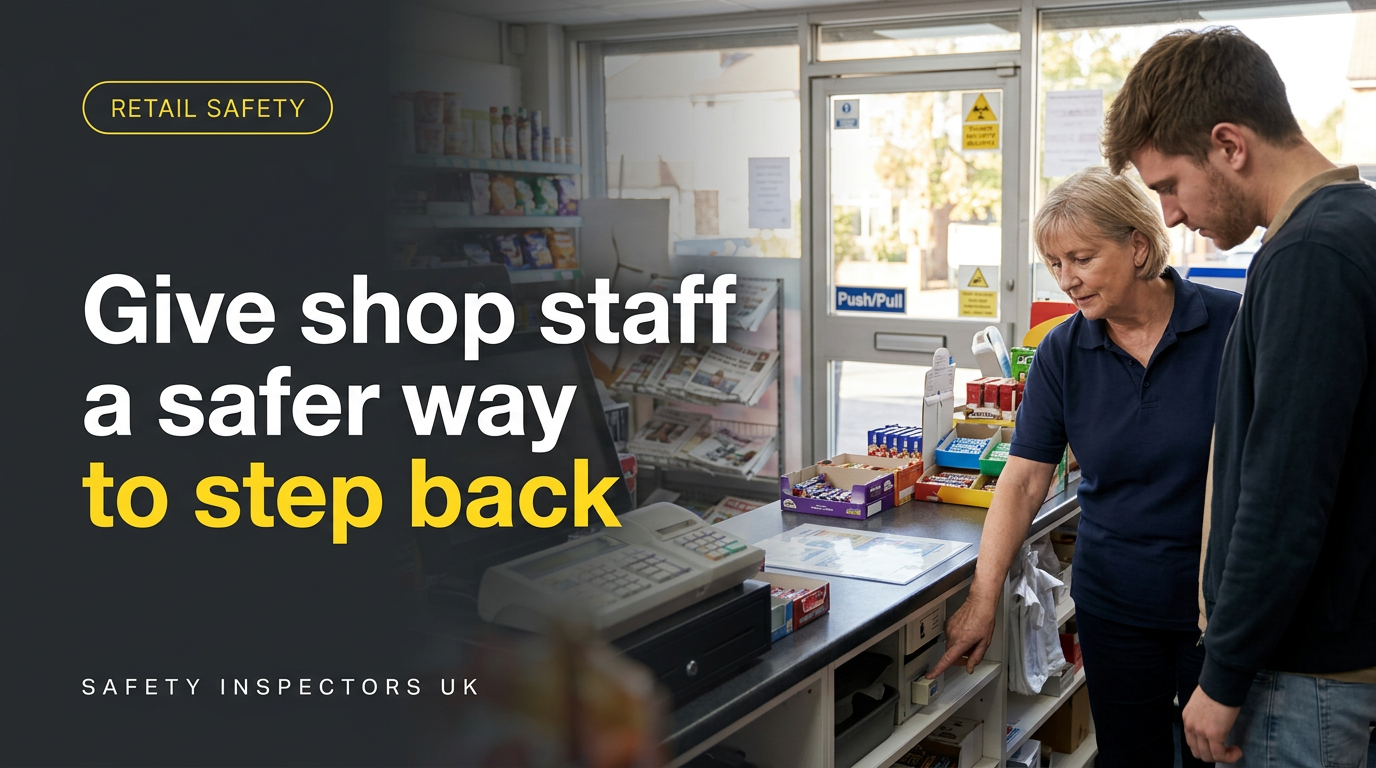
Cover: AI-generated illustrative shop scene, not a real customer or incident.