Sharps disposal arrangements for practice managers · 5 minute read
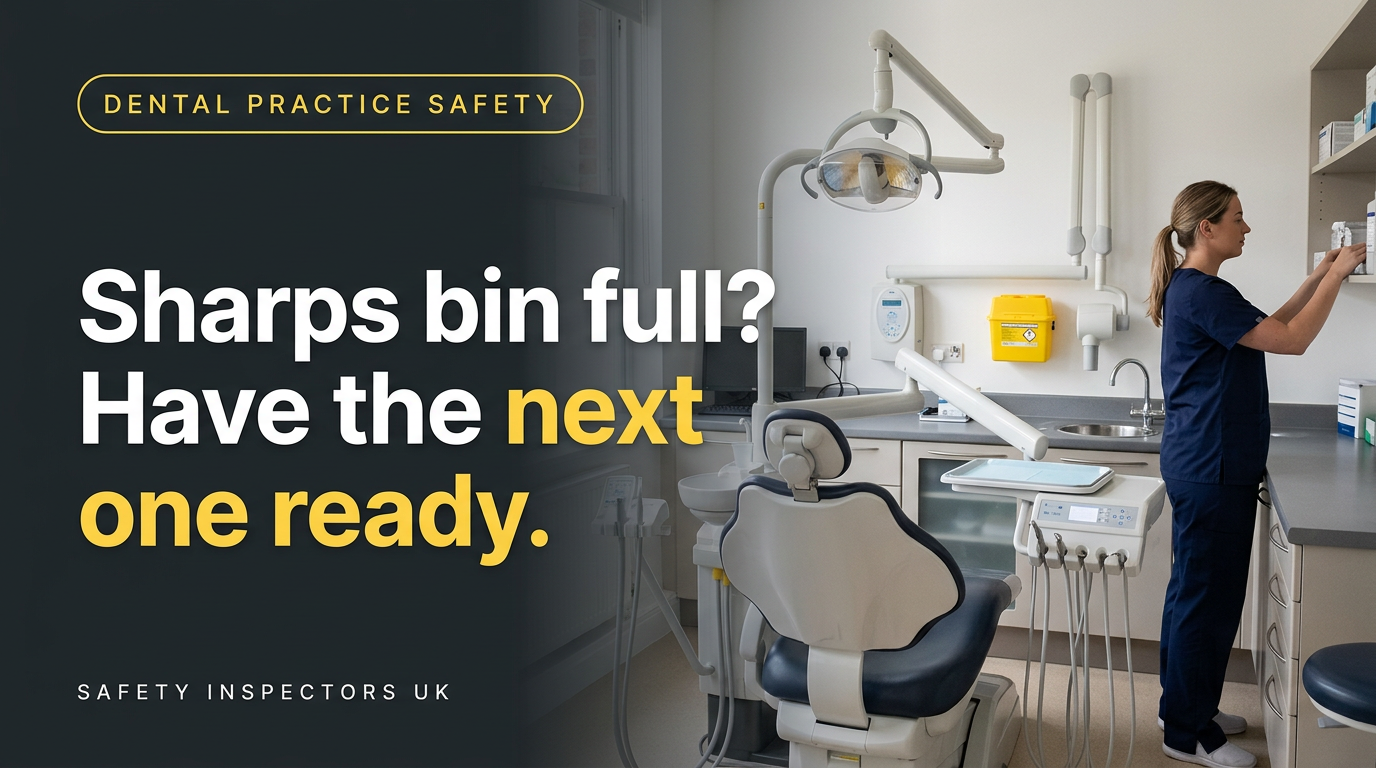
The next patient is waiting. The sharps bin has reached its fill line. Where is the replacement, and who is responsible for changing it?
That is a useful question to ask before a busy clinic begins. A disposal procedure can look complete on paper while the spare containers are in a locked cupboard and the only person who knows the routine is away.
For dental practice owners and managers across the North East, this is a small operational detail with consequences for clinicians, dental nurses, cleaners and waste handlers. Plan the change as part of the working day, alongside the practice’s clinical and infection-prevention arrangements.
Start with the whole sharps procedure
In Great Britain, the Health and Safety (Sharp Instruments in Healthcare) Regulations 2013 place specific duties on healthcare employers. They cover avoiding unnecessary sharps, using safer alternatives where reasonably practicable, and providing secure, clearly marked disposal containers and instructions close to where sharps are used.
HSE’s guide to the Sharps Regulations also explains the restriction on recapping used needles and the limited, risk-assessed exception. Bin management is one part of that wider system; it does not replace the assessment of devices, handling and staff training.
The regulations are law. The workflow suggestions below are practical ways to organise your arrangements, not a new legal timetable for replacing every bin.
Check the position from the user’s viewpoint
Ask the clinical team to show you the disposal point in each surgery. HSE advises disposal at the point of use and warns against leaving bins accessible to non-healthcare workers, particularly children.
Check the actual working position, including the chair and equipment layout. Can the container be used safely without an awkward reach or a journey across the room? Is it secure and suitable for the waste generated? Agree any layout change with the clinical lead rather than simply moving the bin to free up a worktop.
Include cleaners and other support staff in the discussion. They need to know how to report a misplaced sharp or damaged container without being expected to improvise a solution.
Make the procedure work in the room.
Check the practical gaps around your clinical systems.
A workplace inspection can help you review access, storage, responsibilities and action tracking alongside your clinical team’s specialist procedures.
Explore workplace inspections ↗Make replacement a routine, not a scramble
NICE’s infection-prevention recommendations say sharps containers must not be filled beyond the fill line, should be disposed of when that line is reached, and should be temporarily closed when not in use. Follow the container manufacturer’s assembly and closure instructions.
Agree who checks capacity before a session, who can obtain a replacement and who covers breaks or absence. Keep an appropriate stock of the correct containers, with a reorder point that reflects use and supplier lead times. A spare of the wrong type is not a reliable backup.
Make the changeover sequence clear: remove the full container from use, close and label it as required, transfer it through the agreed waste route, and install the replacement correctly. Do not treat the space above a fill line as spare capacity. If safe disposal is unavailable, escalate immediately to the clinical lead before affected work continues.
Follow the bin beyond the surgery door
Check the destination for closed containers and the arrangements for collection. HSE’s healthcare-waste guidance directs providers to consider waste classification, safe storage and transport, as well as infection risks.
Walk through the internal handover with the people who actually do it. Confirm who has access to storage, who checks collection capacity and who deals with a missed collection. Record the action owner and escalation contact, rather than leaving a general instruction to ‘tell reception’.
An extra clinic, a new procedure or a different container supplier may change the arrangements. Put these changes on the practice’s review agenda before staff discover the mismatch during treatment.
Keep the injury response immediately available
Staff need a clear response if an injury occurs. HSE’s sharps-injury advice includes seeking urgent medical advice after an injury from a potentially contaminated sharp and reporting it to the employer.
Check that the practice’s instructions identify the urgent clinical advice route during every opening session, including evenings. Staff should not have to wait for the practice manager to return. Reporting, investigation and corrective action should follow promptly; do not assume a completed incident form closes the matter.
Five checks before the next clinic
- Position: confirm each disposal point suits the work and restricts public access.
- Capacity: check the fill line and have the correct replacement available.
- Ownership: name the person responsible for the change and their backup.
- Handover: confirm closure, labelling, storage and collection arrangements.
- Response: ask staff where they obtain urgent advice and report an injury.
Try this with one surgery first. Record any missing supplies or unclear responsibilities, assign a completion date, then check the correction during a normal session.
PRACTICAL SUPPORT FOR YOUR BUSINESS
Turn the check into a dependable routine.
Tell Safety Inspectors UK where your practice’s workplace arrangements need attention. We can discuss practical safety support that complements your clinical governance.
Discuss your practice’s safety ↗For ongoing action tracking, explore our retained health and safety support.
Sources checked: 21 November 2026. HSE and NICE sources are linked beside the relevant advice. This evergreen management guide uses Great Britain legislation and guidance relevant to dental practices in England; it does not announce a new rule. Read it alongside your practice’s risk assessments and clinical procedures.