Flour handling and cleaning · A practical guide for managers
The flour has disappeared from the floor. Where did it go?
If the answer is into the air after a quick sweep or blast from an airline, the clean-up has moved the problem into workers’ breathing space. A tidy production area is not, by itself, evidence that exposure is controlled.
For bakery owners and food production managers, the useful question is what happens during the whole shift: opening ingredients, filling equipment, dusting work surfaces and clearing up. Include the early team, temporary staff and whoever cleans after production finishes.
A 2026 case with an everyday lesson
In a release published on 20 July 2026, HSE reported that Puratos Limited had been fined £120,000 at Milton Keynes Magistrates’ Court on 17 July. The company pleaded guilty to breaching section 2(1) of the Health and Safety at Work etc. Act 1974.
The inspection described in the report took place on 3 December 2024. HSE found leaking machinery, compressed air being used to clear dust deposits and dry sweeping. Subsequent monitoring recorded inhalable dust concentrations above workplace exposure limits. The case also involved manual handling risks.
This is a lesson from a July prosecution, not a new November announcement or a North East incident. The HSE report shows why a manager should examine the cleaning method as closely as the production process.
Reduce the dust before buying more protection
Flour dust can cause occupational asthma. Some enzyme-containing bread improvers are also respiratory sensitisers. HSE’s flour dust guidance explains that exposure should be reduced as far below the workplace exposure limit as is reasonably practicable; treating the limit as a target misses that point.
Ask whether flour used to prevent sticking can be avoided through suitable non-stick surfaces. Where flour is still necessary, investigate low-dust flour and careful handling. Discuss liquid, paste or dust-suppressed alternatives for relevant improvers with suppliers. Check that a proposed change works safely with your process and food requirements.
COSHH is the legal framework for preventing or adequately controlling exposure to hazardous substances in Great Britain. HSE’s control guidance describes equipment, working methods, supervision and maintenance. A mask purchase alone is not a complete control plan. Assess where extraction or respiratory protection remains necessary, using competent advice.
Does the written method match the shift?
Review the work where it happens.
Safety Inspectors UK can help managers identify practical workplace issues and prioritise actions. Bring your COSHH assessments, cleaning instructions and outstanding maintenance list into the review.
Explore health and safety inspections ↗Make the safe clean-up possible
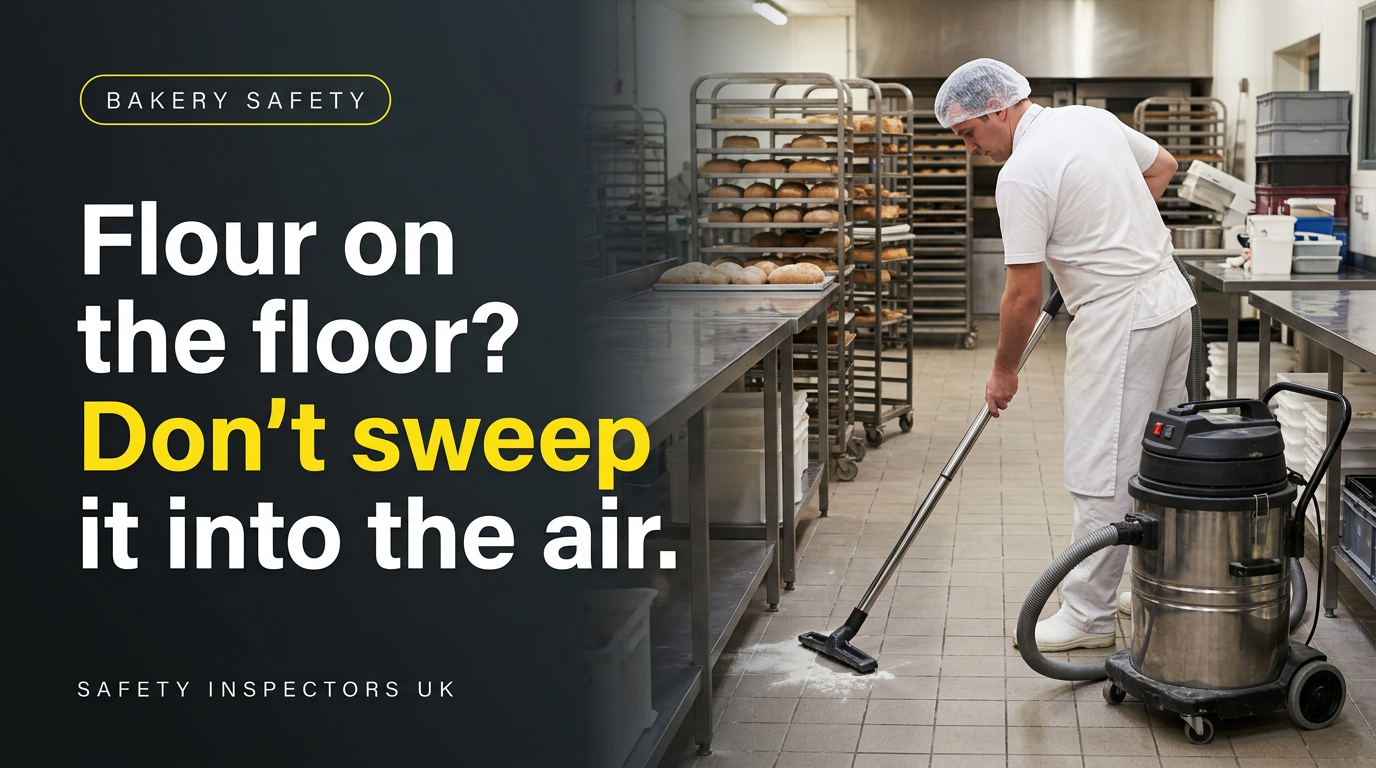
HSE’s advice for bakers says to use wet methods or an industrial vacuum instead of sweeping or compressed air. Select a method and equipment suitable for the material and area; an available domestic vacuum is not automatically suitable.
Put the correct equipment within reach and explain how to use, empty and maintain it safely. Agree who deals with spills, who reports a damaged hose or leaking seal, and what happens if the normal equipment is unavailable. Do not leave the team to improvise with a broom when production is busy.
Observe ingredient handling as well. HSE advises gentle working, avoiding flour throwing, using dredgers or sprinklers for dusting and starting mixers slowly until wet and dry ingredients combine. Follow the machine’s safe operating instructions and keep its safeguards effective.
Include workers’ health in the review
HSE’s COSHH guidance for bakers says health surveillance is normally needed. Arrange an appropriate programme with competent occupational health support, rather than assuming a general wellbeing questionnaire covers the risk.
Make sure workers know how to report breathing or skin concerns promptly and confidentially. Managers should arrange appropriate professional advice, not diagnose symptoms themselves. Surveillance does not replace exposure controls; use findings to review whether those controls are working.
Six checks before the next shift
- Watch one ingredient-handling task and one clean-up with the people who do them.
- Identify where dust escapes and assign an owner to repair leaks.
- Check whether dusty ingredients or flour-dusting processes can be changed.
- Confirm suitable cleaning equipment is available, maintained and understood.
- Check temporary and cleaning staff receive the same practical instructions.
- Review the COSHH assessment, health surveillance arrangements and outstanding actions together.
Give each action an owner and a review date
For a North East bakery, these national principles need to become arrangements that fit the actual premises, staffing and production schedule. There is no separate local flour-dust standard. Start with a short observed-task review, record the changes needed and check the next shift follows them.
For continuing help with action tracking and wider responsibilities, see our retained safety services.
Turn the review into practical improvements.
Tell us about your bakery, the tasks that create dust and the controls already in place. We can discuss the workplace support you need and the next steps.
Request safety support ↗