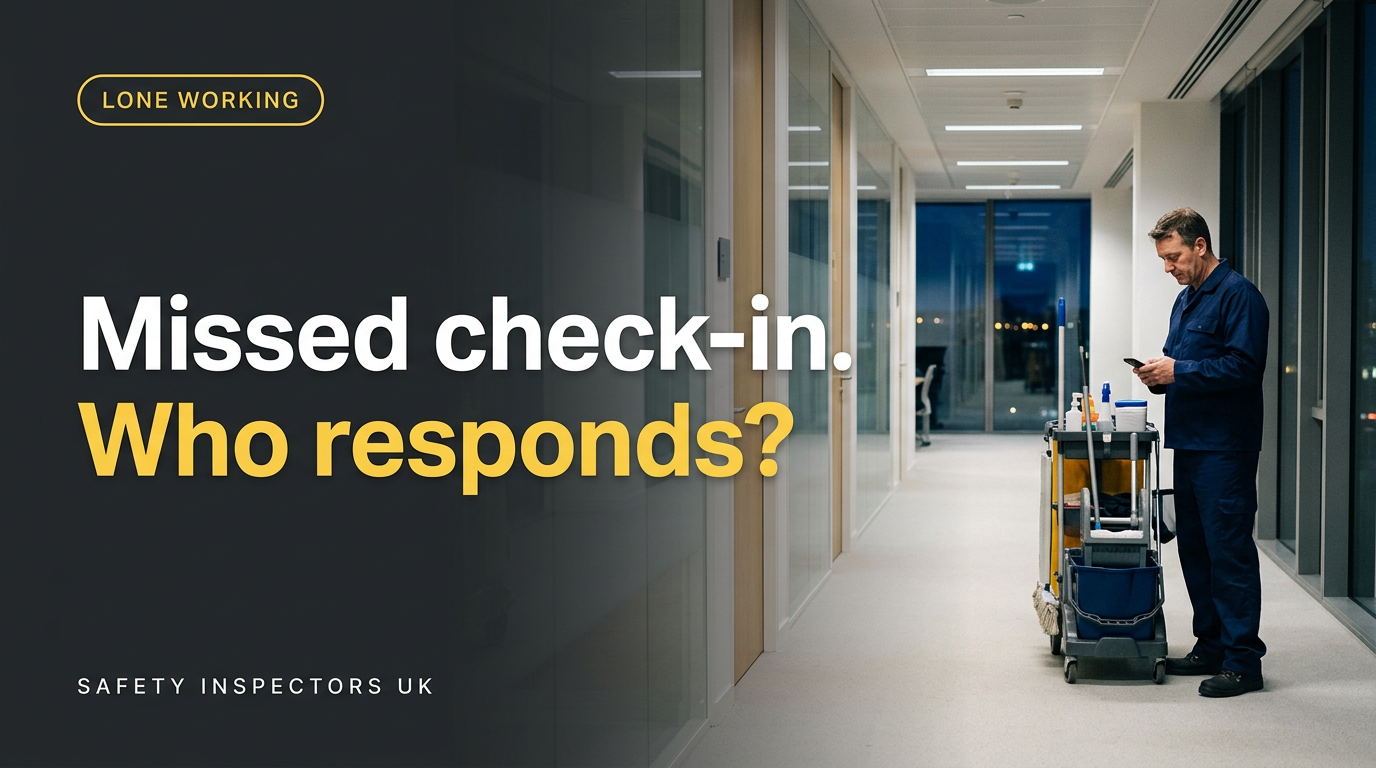
The office has closed. The cleaner is still working. Their agreed check-in does not arrive.
Does someone notice, know which building they are in and have a clear next step? Or does the message sit on a supervisor’s phone until morning? This is a planning question, not a reported incident.
For evening cleaning teams, a check-in only helps when there is someone available to act on it. The practical test is whether the arrangement still works during holidays, sickness, poor reception and a last-minute change of site.
Assess the evening shift as it actually happens
HSE includes cleaners among workers who may work alone without close or direct supervision. Its lone-working overview explains that employers must manage the risks before people work alone. This is existing Great Britain guidance, not a new rule for cleaning businesses.
Start with the building and tasks. Who else will be there? Which areas are locked? What changes when reception and security staff leave? Consider access, lighting, equipment, cleaning substances and whether help could reach the worker.
An assessment should also set limits on what can be done alone. A phone does not make an unsuitable task safe. If a task needs assistance, different equipment or a different time slot, arrange that before allocating the work.
Agree responsibilities with the client
A cleaning company may employ the worker while another business controls the premises. HSE’s risk-management guidance says an employer sending lone workers to another workplace must ask about that workplace’s risks and controls.
Turn that exchange into usable instructions: the correct entrance, permitted areas, site contact, emergency arrangements and anything temporarily out of use. Make sure changes reach the person doing the shift, including relief cleaners.
Do not assume the client’s reception team will monitor an evening worker after reception closes. Agree who will know they have arrived, who monitors them and how completion is confirmed. A named responsibility is easier to check than “the office will deal with it”.
Check what happens after everyone else leaves
A workplace inspection can help you identify gaps in access, task planning and emergency arrangements, then agree clear actions with the people responsible.
Write the response before choosing the reminder
HSE’s monitoring guidance calls for contact arrangements, a reliable way to confirm completion and regular testing. Set contact intervals through the risk assessment; the guidance does not prescribe one universal interval for every cleaner or site.
As a practical management approach, give the person monitoring the shift a short response plan. It should identify the worker, location, expected finish, contact method and who takes over if the first responder is unavailable.
Explain what to do when contact is missed: attempt contact promptly, consider the known risks and follow the agreed escalation route. Set clear triggers for urgent assistance. Where there is reason to suspect an immediate emergency, do not wait through a routine sequence of unanswered messages before calling emergency services.
Consider access too. Someone may know the street address but not the building entrance, floor or locked area. Keep necessary access information available securely to those who may need it. Do not send another person into an unknown dangerous situation as an improvised rescue.
Test the whole arrangement with the people using it
A phone, radio or app can support the system. Check reception in the actual work areas, charging arrangements and what happens when a device is unavailable. Train the worker in the agreed alternative rather than leaving them to invent one.
Run an agreed practice exercise with the cleaner and responders, without making a false emergency call. Can the alert be noticed? Can the backup take over? Can the right site be identified? Record what failed, who will fix it and when you will check the fix.
HSE’s emergency-planning guidance emphasises clear responsibilities and realistic practice, including night work and times when premises are closed. Use those conditions when reviewing the plan, rather than testing only while everyone is at their desk.
Six checks before the next lone cleaning shift
- Suitable work: Confirm the tasks can be done safely alone and staff know when to stop and seek advice.
- Known location: Record the site, relevant work areas and expected finish, with a way to update changes.
- Available responder: Confirm who is monitoring, that they have accepted the role and that backup cover exists.
- Working contact: Check the agreed communication method and the fallback for poor reception or equipment failure.
- Usable response: Make escalation instructions and essential site information accessible to the people responding.
- Confirmed finish: Close the shift only when completion or the worker’s safety has been confirmed through the agreed arrangement.
Ask the cleaner to explain the process in their own words. Ask the responder the same question. If their answers differ, resolve that before the next shift. Review the assessment whenever the tasks, site or staffing arrangements change.
Make the response clear before the next shift
If you manage cleaning teams or premises in the North East, tell us how lone working is organised and where you need support. We can discuss a review of your arrangements and practical next steps.
Retained health and safety support can help keep reviews, responsibilities and actions on track.
Sources checked: 13 November 2026. HSE guidance is linked above. The checklist is practical management advice to support a site-specific risk assessment. Cover image: AI-generated illustration, not a real cleaner, client or incident.