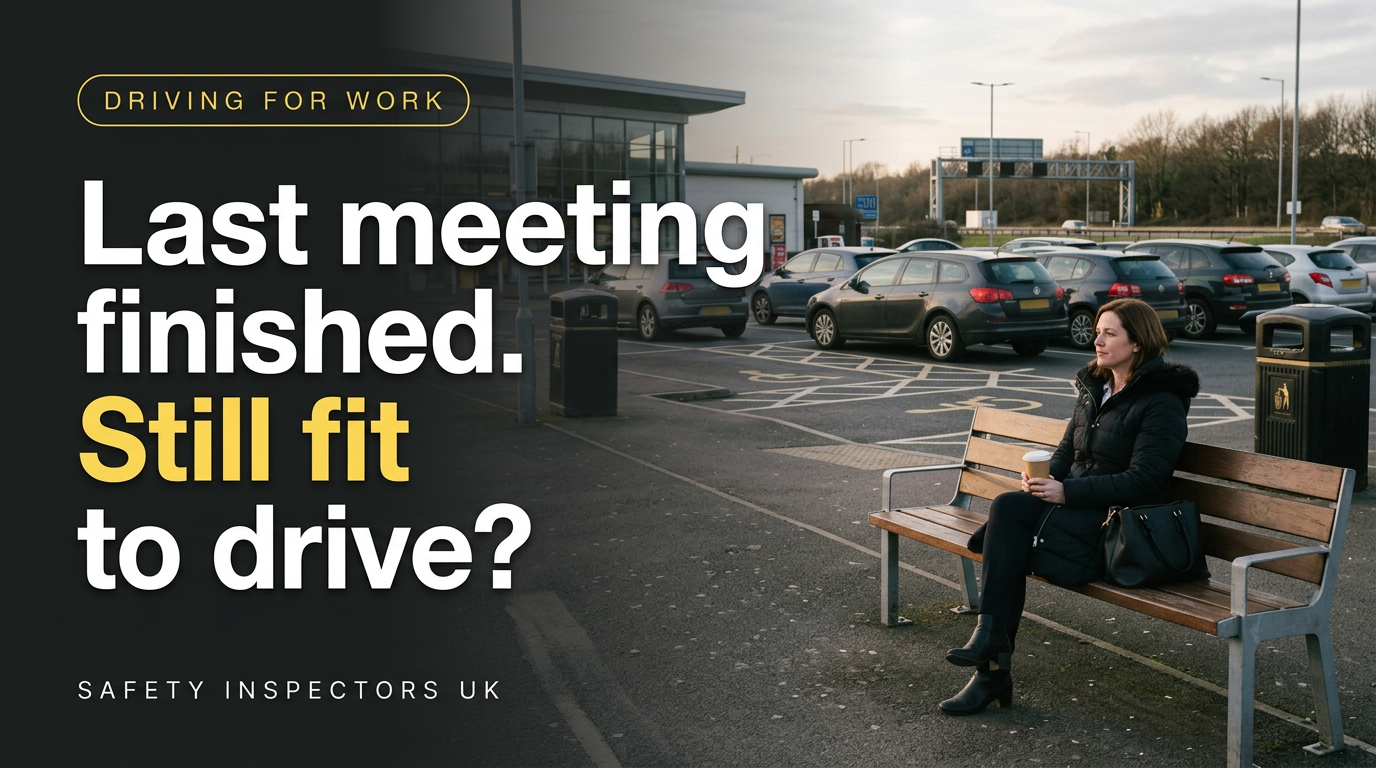
Safer travel between client appointments · 5 minute read
The diary ends at the client’s office. The working day still has a drive attached.
For consultants, surveyors and sales teams, a full day of appointments can look manageable until travel, parking, overrunning meetings and follow-up calls are added. The return journey is easily left outside the planning conversation.
Start with one real diary. Ask when the person leaves, when they expect to return and where they can take proper breaks. If nobody can answer, the schedule is not ready simply because every meeting has a calendar invitation.
A personal car does not remove the work risk
HSE explains that health and safety law applies to work activities on the road, including work journeys in an employee’s own vehicle. Ordinary commuting between home and the usual workplace is excluded from that description. Do not assume every journey ending at home is ordinary commuting: establish the actual work-travel arrangements.
This guide focuses on professional services teams using cars for client visits in Great Britain. It is not a summary of the separate drivers’ hours regimes that may apply to other transport operations. Your assessment should cover the driver, vehicle and journey, rather than relying on a mileage claim as evidence that travel was safe.
Book the travel before filling the gaps
HSE’s journey-planning guidance asks employers to consider whether a journey is necessary, allow realistic travel time and avoid schedules that pressure people into taking risks. Consider a remote appointment, a different visit order or an overnight stay where appropriate.
Make travel time visible in the same diary used to book appointments. Include finding the premises, parking, signing in and walking to the meeting room. A map estimate between postcodes does not include these tasks. Leave room for a delayed client without immediately consuming the next break.
Ask the person doing the journey to challenge the plan before confirming it. For a North East team visiting several client locations, the useful detail is the actual route and timing, not a generic maximum number of appointments. A short local visit and a distant full-day assignment need different arrangements.
A break should survive a busy afternoon
Rule 91 of the Highway Code recommends a break of at least 15 minutes after every two hours of driving. This is a recommendation, not a universal legal driving-time limit. It does not mean someone who feels sleepy should continue until two hours have passed.
Identify suitable stopping places before departure. Do not routinely fill the planned rest period with a team call, a proposal review or a demand for immediate updates. If the schedule changes, the manager should help protect the break rather than simply repeat the original arrival time.
Make the travel policy work in the diary.
Our retained safety support can help you review responsibilities, practical controls and follow-up actions alongside your wider workplace arrangements.
Explore retained safety support ↗Agree who can change the plan
Give staff a named contact and a backup for late finishes. Decide who can authorise accommodation, alternative transport or moving the next appointment. Set out how the business will handle those costs so that a worker is not left weighing an avoidable expense against driving while exhausted.
HSE’s guidance on drivers’ health explains that tiredness reduces alertness and concentration and slows reactions. Long working hours can contribute to fatigue. Make reporting tiredness an accepted safety decision, not a test of commitment.
If someone says they are too tired to drive, do not bargain over how many miles remain. They should not begin a journey tired; if sleepiness develops while driving, the Highway Code advises stopping in a safe place. Arrange the next step once they are safely stopped. A manager should not expect messages or a discussion while they are driving.
Six questions before confirming tomorrow’s visits
- Does each visit need to happen in person?
- Does the diary include realistic travel and arrival time?
- Where are the breaks, and will they remain free of work demands?
- Has the return journey been considered after the final appointment?
- Who can approve a change if the day runs late or the worker feels unfit to drive?
- Does the worker know the contact, backup and expense arrangements?
Review what happened, not just what was booked
At the next team check-in, compare planned and actual finish times. Ask which visits regularly overrun and whether staff have skipped breaks to keep promises. Repeated changes are information for better planning, not simply individual diary-management failures.
Record a small number of specific improvements, give each an owner and check the next set of visits. Keep vehicle condition, licence and insurance checks within the wider driving-for-work arrangements; a well-planned journey cannot make an unsuitable driver or vehicle safe.
Build a workable plan for travelling staff.
Tell us how your team travels, who books visits and where the current arrangements become difficult. We can discuss practical safety support for your business.
Request safety support ↗