Preventing slips in Stockton cafés and restaurants · 5 minute read
The floor is mopped.
The sign is out.
Someone still walks across it.
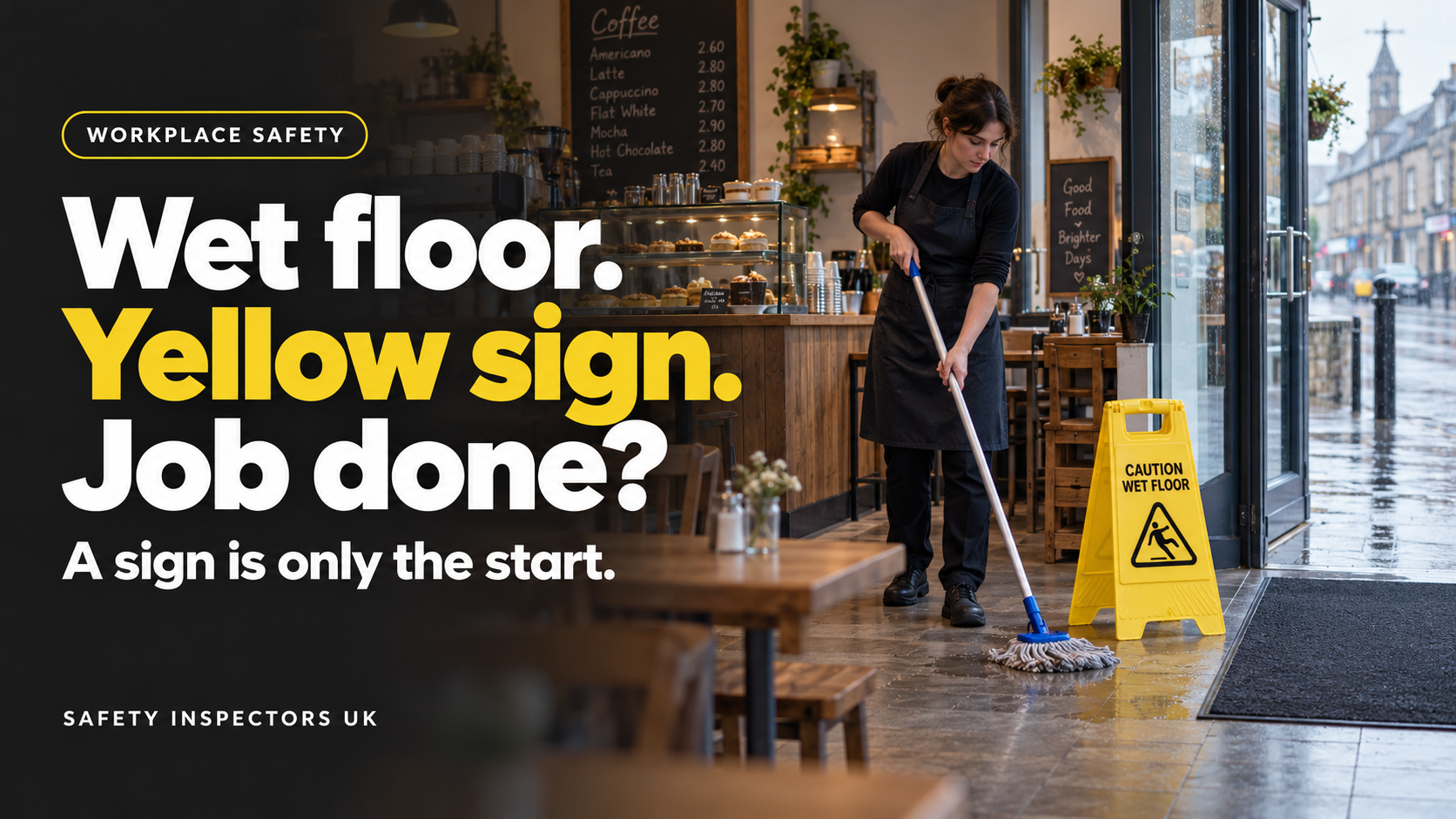
A warning sign tells people about the wet floor. It does not dry it, remove the spill or stop anyone walking through it.
If you manage a café or restaurant in Stockton-on-Tees, start with what happens during a busy shift: wet shoes at the entrance, milk behind the counter, water by the dishwasher and staff carrying hot drinks. Those are the conditions your slip-prevention measures need to handle.
Start with the source, not the sign
Walk the route from the entrance to the counter, tables, toilets and kitchen. Ask the people working there where the floor gets wet or greasy. Their answers may tell you more than a cleaning rota.
A dishwasher that leaves a puddle every afternoon needs a maintenance action. Repeated mopping treats the result while leaving the cause in place. The same applies to overflowing sinks and leaking equipment.
HSE’s catering guidance on slips and trips is clear: assess the risks and take reasonable precautions to protect staff and others, including customers.
Why a wet-floor sign is not enough
If the route to the toilets crosses a freshly washed floor, customers will still need to use it. A cone beside the route does little to stop them.
Plan how people will be kept off the affected area until it is safe to use. Depending on the layout, that could mean barriers, cleaning smaller sections with a dry route alongside, or completing routine cleaning when the area is unoccupied. Keep escape routes usable.
HSE explains that signs and cones warn people but do not prevent access. Use signs alongside effective controls. Remove them when the floor is clean and dry, so staff and customers still pay attention when they reappear.
Make the cleaning method match the floor
A floor can look clean and still be slippery. A thin film of water on a smooth surface can be enough. Grease also needs an effective cleaning method, not simply a quick pass with a mop.
Check the floor and cleaning-product instructions. Use the correct product and dilution, allow it time to work where required, and maintain the cleaning equipment. Agree how the floor will be dried and who decides the area can reopen.
HSE’s floor-cleaning guidance recommends controlling access during drying and choosing methods suited to the surface. Show staff the method in their actual work area, then watch them do it.
A repeat puddle needs a proper fix.
Get a fresh pair of eyes on your premises.
Our health and safety inspections can help you identify practical problems, prioritise improvements and agree what needs doing next.
Explore workplace inspections ↗Look beyond the kitchen
At the entrance, consider how rainwater is carried indoors. Suitable entrance matting can help capture it, but check the mat’s condition and whether it stays flat and in position. A curled edge can introduce a trip hazard.
Behind the counter, review where drinks are prepared and carried. Could a drip tray, lid or different working arrangement stop spills reaching the walking route? HSE’s guidance on floor contamination starts with preventing material reaching the floor.
Also agree where incoming deliveries go. Boxes should have a destination that does not obstruct the route between the kitchen and dining area. “Only for a minute” is not a useful storage plan during service.
A five-point check for the next shift
- Find the repeat problem. Ask staff which area regularly becomes slippery and record the source, not just “wet floor”.
- Assign a response. Name who takes charge of a spill and who covers that responsibility during breaks.
- Check access control. Can staff actually keep people away while cleaning and drying take place?
- Watch the method. Check the product, equipment, drying arrangements and standard before reopening.
- Close the action. Give leaks, damaged flooring and layout problems an owner and completion date, then check the fix.
Use this as a management check alongside your risk assessment. It does not replace a review of the particular premises and activities. SIUK’s health and safety inspections can help identify practical issues and turn findings into priorities.
Questions café and restaurant managers ask
Should we wait until closing time to clean a spill?
No. Deal with spills promptly. Quiet periods can suit planned routine cleaning, but an unexpected spill needs an immediate response that protects people while it is removed.
What if we use a cleaning contractor?
Agree the method, timing, access arrangements and handover with them. Make sure your shift manager knows when areas remain wet. HSE’s floor-cleaning information sheet highlights the importance of management and communication in effective cleaning.
PRACTICAL SUPPORT FOR YOUR BUSINESS
Make the next shift safer.
If you run a café or restaurant in Stockton-on-Tees, tell us where slips, spills or cleaning arrangements are causing concern. We can discuss an inspection, a risk assessment review or ongoing support to suit your premises.
Discuss your workplace safety ↗Call 0330 1226 337 · Send a service enquiry
Need help keeping actions on track? Explore our retained health and safety support.
Guidance checked: 1 November 2026. Sources are linked beside the relevant advice above. Use this guide alongside an assessment of your own premises.