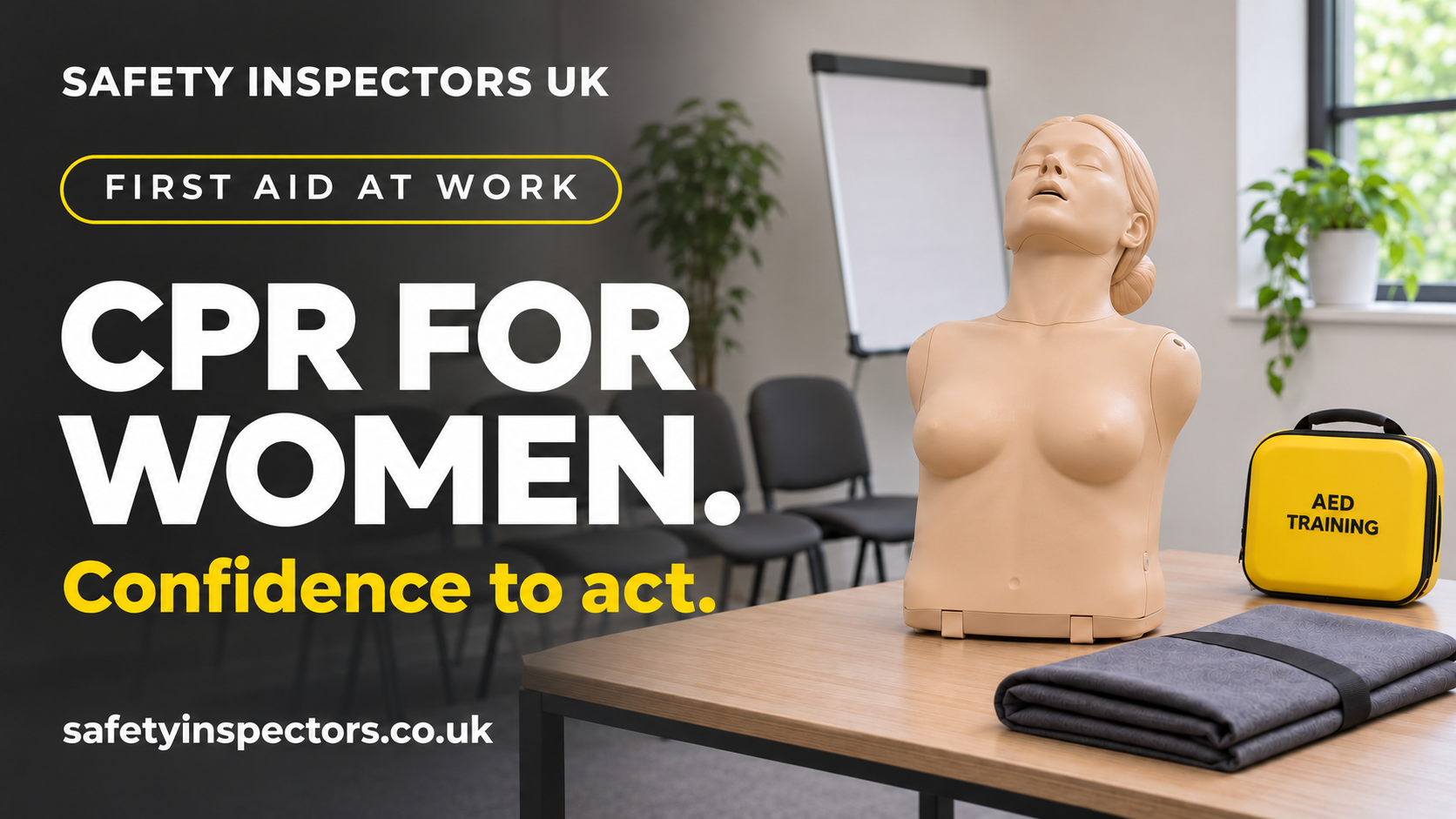
FIRST AID AT WORK · CONFIDENCE TO ACT
Would your team hesitate to give CPR to a woman?
Worries about touching breasts, moving clothing or being filmed can make people hesitate. Workplace first aid training needs to address those concerns openly, before an emergency happens.
The practical priority is the same: recognise an unresponsive person, call for help and act on abnormal breathing. Embarrassment must not become a reason to delay.
What the research actually says
In a 2024 St John Ambulance survey of 1,000 UK respondents, 32.8% selected concerns about inappropriate touching or accidentally touching the chest or breast area when asked about giving CPR to a female stranger in public.
A further survey commissioned by the charity, involving 2,000 UK adults in March 2026, found that 31% of men said fear of accusations of inappropriate touching would make them hesitate. One in five men cited fear of being filmed and posted on social media.
These are surveys of attitudes, not measurements of how often CPR was actually given. They should not be presented as proof that women are “a third less likely” to receive CPR in every setting.
St John Ambulance’s CPR Bra campaign draws attention to these barriers. The workplace lesson is straightforward: make the difficult questions part of training.
01Recognise the emergency
Check it is safe to approach. If an adult is unresponsive, call 999 immediately, use speakerphone and assess breathing while the call connects. The call handler can help.
If they are unresponsive and not breathing normally, start CPR. Occasional gasps are not normal breathing. This applies regardless of sex or body shape.
02Start chest compressions
Place your hands in the centre of the chest, on the lower half of the breastbone. Push 100–120 times a minute to a depth of 5–6 cm, allowing the chest to rise fully between compressions.
If trained and able, give 30 compressions followed by 2 rescue breaths. Otherwise, continue chest compressions and follow the call handler.
St John Ambulance explains that compressions can be performed over clothing. Do not delay starting CPR simply to undress someone.
03Use the defibrillator
Ask a helper to fetch an AED while CPR continues. Switch it on and follow its prompts. Pads must contact bare skin in the positions shown.
No. The 2025 Resuscitation Council UK guidance prioritises correct pad position and bare-skin contact. If these can be achieved quickly with the bra in place, it can stay. Remove it if it obstructs correct placement.
What about a metal underwire?
The presence of metal underwire alone is not an automatic reason for removal under the 2025 resuscitation guidance. An ILCOR evidence review found no studies reporting patient outcomes and no case reports of adverse events from defibrillation without bra removal. That is limited evidence, not proof that every arrangement is safe.
Place pads on bare skin in the correct positions, clear of fabric and metal. Move or remove the bra if needed to achieve this quickly. Do not move pads to an incorrect position to work around clothing. Follow the AED manufacturer’s instructions and the emergency call handler.
Some public guidance, including NHS inform, still advises removing underwired bras. Training should acknowledge this difference and focus on prompt, correct pad placement. Do not delay CPR while checking what an underwire is made from.
Keep everyone clear during rhythm analysis and any shock. Resume CPR when instructed.
04Protect dignity while helping
Ask bystanders to give space, look away and stop filming. A helper can shield the person from view while treatment continues. Explain what you are doing calmly.
Expose what is necessary for treatment. Do not let attempts to create privacy delay chest compressions or AED use. Equally, avoid unnecessary exposure once access is no longer needed.
Do not wait for a rescuer of a particular gender. Get available help and follow the emergency call handler’s instructions.
Five things employers can change
- Ask the awkward question. Would anyone hesitate because of breasts, clothing or fear of being filmed?
- Practise realistic scenarios. Ask your training provider about suitable manikins representing different body shapes, including breasts, and practising access for AED pads.
- Check equipment. Confirm the AED is accessible and maintained, with pads in date and the recommended rescue accessories available.
- Allocate supporting jobs. Practise calling 999, collecting the AED, meeting the ambulance and keeping bystanders back.
- Refresh skills. Include these issues in practical refresher training, not just a reminder email.
A training certificate does not tell you whether someone feels ready to act in this situation. Ask, practise and address uncertainty.
Make confidence part of your first aid arrangements.
Safety Inspectors UK can help you plan workplace first aid training around your people, premises and working arrangements.
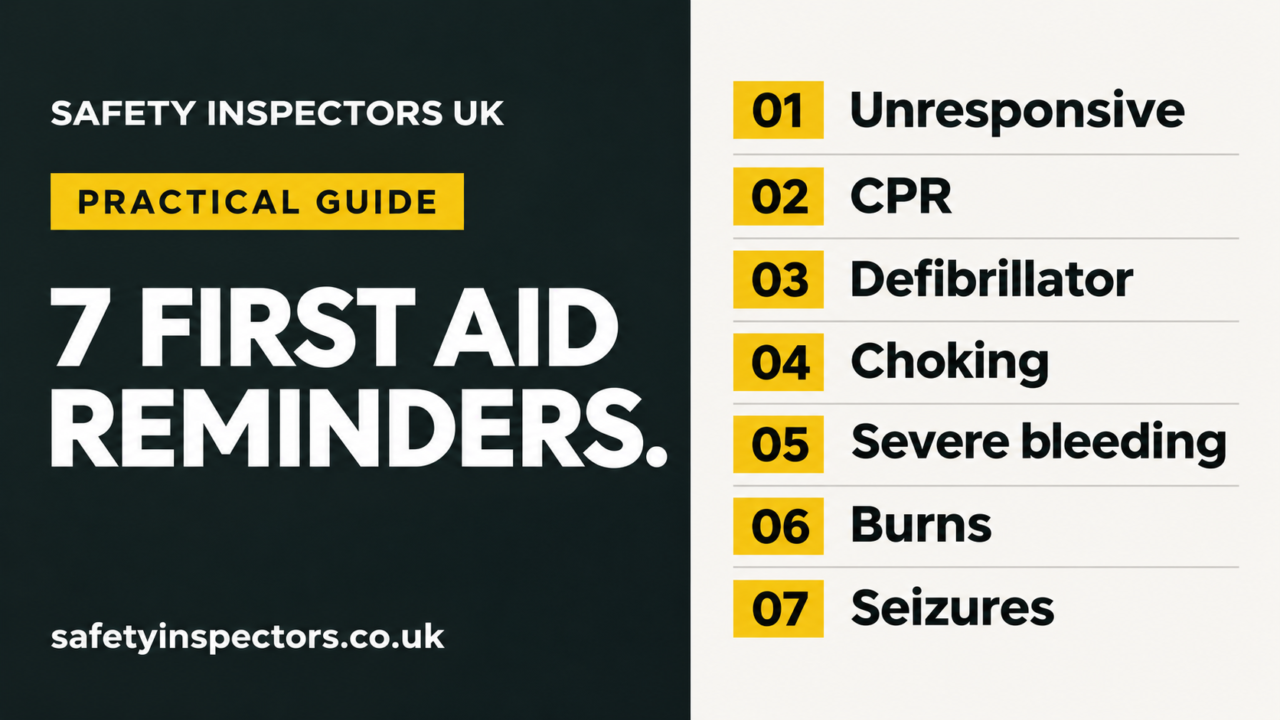
Discuss first aid training ↗Also read: 7 first aid reminders for the workplace.
Sources and scope
Sources are linked alongside the relevant points. Guidance checked on 8 November 2026. Adult first aid awareness only; this article supports practical training and does not replace it. In an emergency, call 999 and follow the call handler.