Lifting sling checks and withdrawal from use · 5 minute read
A damaged sling has been reported. By the next shift, it is back on the rack.
That is the gap managers need to close: finding a defect is only useful if the equipment cannot quietly return to work. In a fabrication shop, a shared lifting-gear store needs a clear route from concern to withdrawal, assessment and a recorded decision.
A recent HSE prosecution shows why this matters. For North East manufacturers, the practical question is whether anyone can pick up a suspect chain or sling before the concern has been resolved.
The case: deterioration was not acted on
In a press release dated 20 October 2026, HSE reported that a lifting chain failed at Wedge Group Galvanizing Limited’s Crediton site. A steel beam weighing nearly three tonnes fell into molten zinc, causing a worker severe burns. The incident happened on 12 October 2021; the sentencing was on 14 October 2026. Those dates distinguish the recent enforcement outcome from the earlier accident.
HSE found damaged and deteriorated chains had not been withdrawn, required checks had been missed, and the slinging arrangement overloaded the chains. The company was fined £566,666. This was a Devon case, not a reported North East incident.
The management lesson is wider than galvanising: a lifting accessory needs to be suitable for the job, in safe condition and removed from use when there is reason to doubt it.
A pre-use check and a thorough examination do different jobs
HSE’s examination guidance describes thorough examination as a detailed assessment by a competent person, followed by a written report. For lifting accessories, the usual interval is six months unless a competent person’s examination scheme specifies otherwise. Exceptional circumstances that could affect safety can also trigger examination.
Pre-use checks help identify problems arising between examinations. Follow the manufacturer’s instructions and the arrangements set for your equipment and working conditions. Teach users what they should check, what must stop the lift and who receives the report.
Keep the current report accessible and match it to the actual accessory’s identity. Read the findings and required actions; do not treat the next examination date as the only relevant information.
Check the system around the lifting gear
A workplace inspection can help identify gaps in storage, reporting and action tracking. Specialist lifting-equipment examination remains a separate task for a suitably competent person.
Explore health and safety inspections →Make withdrawal work across every shift
Our practical recommendation is to give suspect equipment a defined holding place that prevents selection for use. A label alone is weak protection if the sling stays beside ready-to-use equipment. Use suitable segregation or controlled storage, with identification that stays with the item.
Record the accessory identity, the concern, who reported it and who now owns the action. Tell the next shift what has been withdrawn. Provide a suitable alternative or stop the affected work; production pressure should not turn a quarantine area into a spare-parts rack.
Agree who can authorise return to service, and what evidence they need from the relevant competent person or supplier. Operators should not improvise repairs. Record repair, replacement or disposal decisions and update the equipment register so old records do not suggest an unavailable item is ready.
These are suggested management arrangements, not a claim that the law specifies one particular colour of tag or type of cupboard.
Check the planned lift as well as the condition
Under LOLER, as explained by HSE, lifting operations must be properly planned by a competent person, appropriately supervised and carried out safely. Equipment and accessories must be suitable and appropriately marked. Safe capacity can depend on configuration; the biggest number on a tag is not a universal permission to lift.
HSE’s planning guidance includes the load, environment, attaching and securing arrangements, pre-use checks and equipment integrity. A change in load or method deserves review. Let the competent planner establish the correct accessory and configuration, taking account of the manufacturer’s limits and the actual conditions.
A five-point check for the next production shift
- Match identity to evidence. Pick an accessory in use and locate its current examination report and any outstanding actions.
- Watch the check. Ask a trained user to explain the checks for that specific accessory and how they report uncertainty.
- Test the withdrawal route. Ask where a suspect item goes and who prevents it being selected again.
- Confirm safe alternatives. Check that replacement gear is suitable for the planned lift, rather than simply available.
- Close the loop. Give every unresolved concern an owner, a decision and a record that the next shift can find.
Start with one shared lifting-gear store today. If the answers differ between supervisors, settle the process before the next lift.
Turn reported defects into completed actions
If you manage a North East manufacturing workplace, SIUK can discuss practical inspection and risk-management support. Tell us where equipment checks or shift handovers are falling short.
Request workplace safety support ↗For ongoing help with responsibilities and follow-up, explore retained safety services.
Sources checked: 14 November 2026. HSE’s prosecution report and current LOLER, examination and planning guidance are linked above. This article addresses Great Britain; local relevance does not change the national duties. The checklist is practical guidance to support your site-specific arrangements.
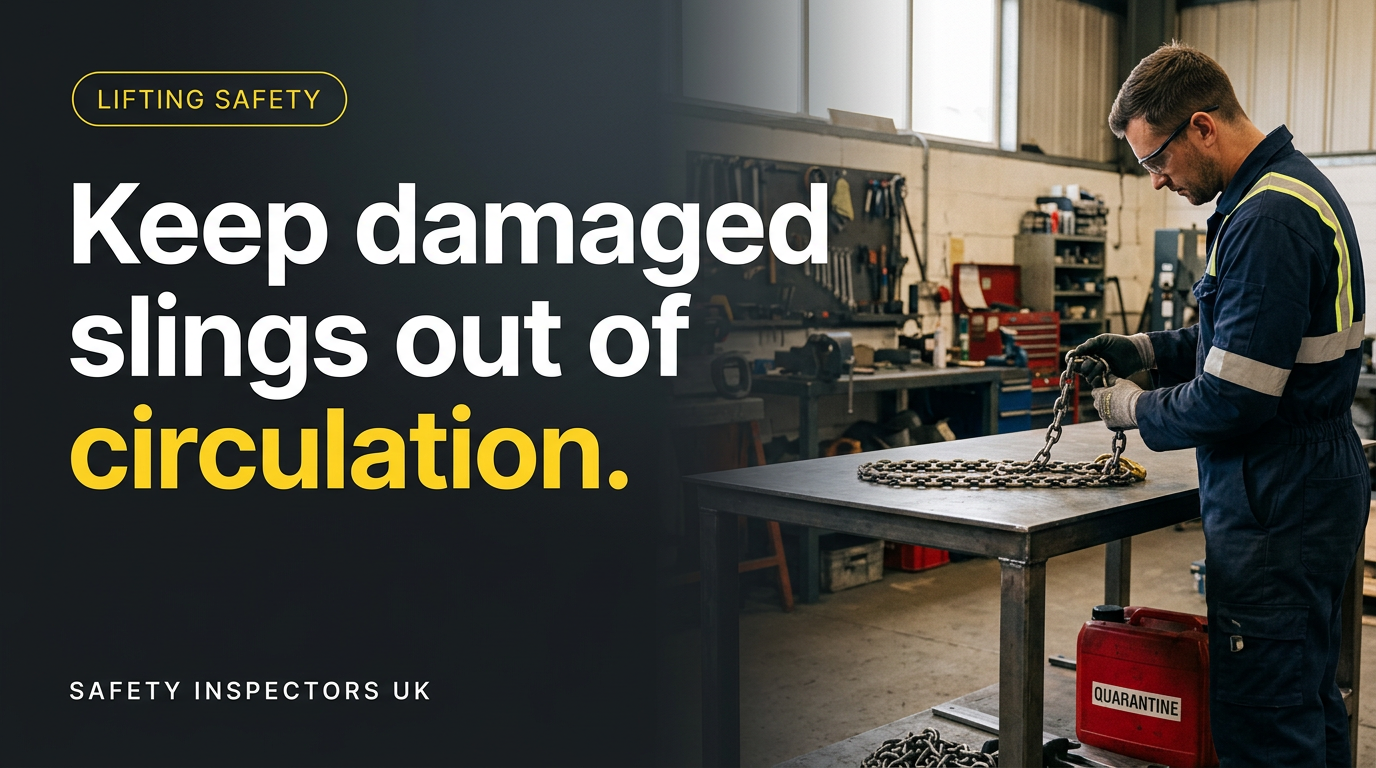
Cover image: AI-generated illustration of an unloaded sling inspection, not a photograph of the incident or a SIUK customer.