Practical management of little-used outlets · 5 minute read
A room drops off the booking calendar. Its tap is still connected.
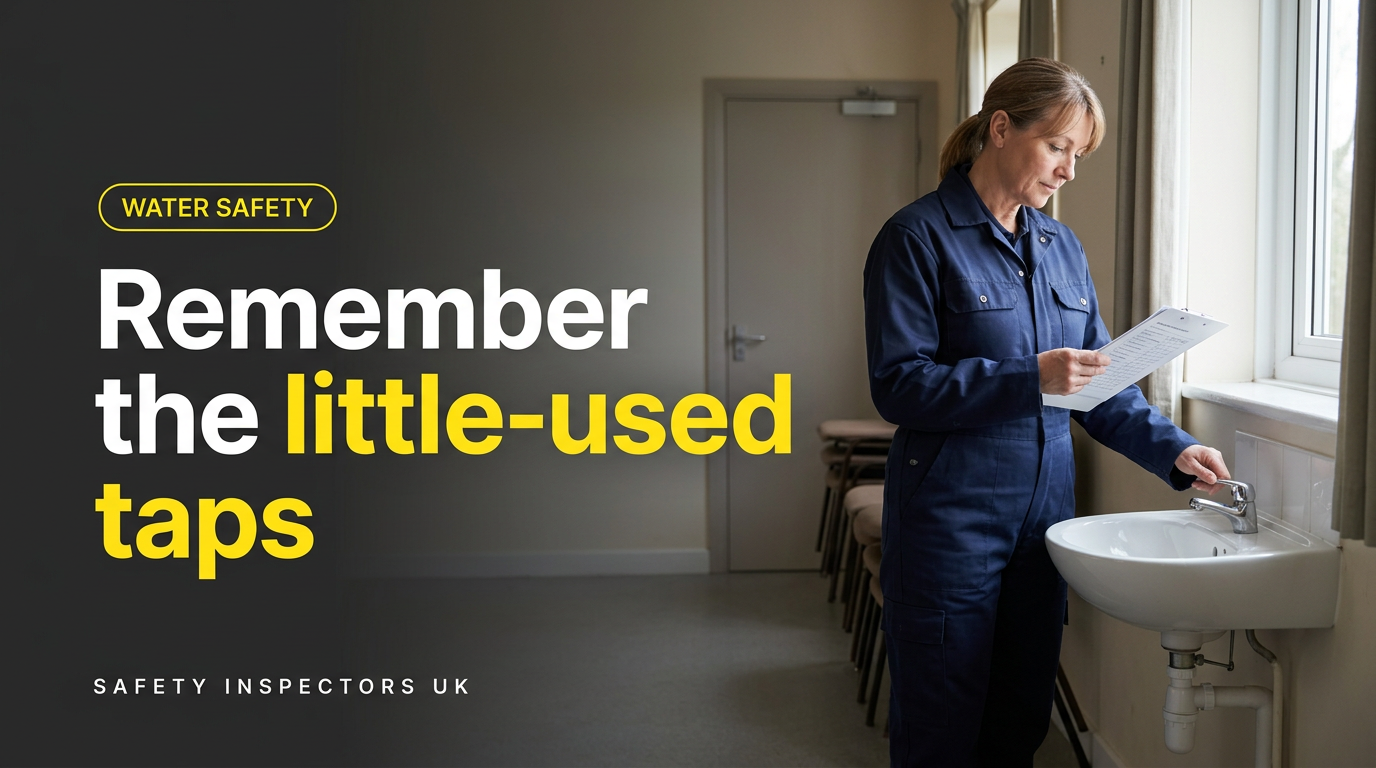
For a community centre manager, a cancelled weekly group can change more than room income. A basin in a side room, an upstairs kitchenette or a changing-room shower may now receive much less use. The building can look busy while individual outlets sit idle.
Make changes in room use a prompt to check your water safety arrangements. For North East community venues, that means linking the person managing bookings with whoever manages the water system. The guidance below is national; there is no separate local flushing rule.
Start with the assessment
In Great Britain, employers and those controlling premises have duties to assess and manage risks from legionella. HSE explains the legal framework, including the Health and Safety at Work etc Act and COSHH. The duty is to prevent or adequately control risk; this article is practical guidance, not a new legal requirement.
Your assessment needs someone competent to understand the actual system and its users. Consider storage, temperatures, stagnation, the potential for contaminated droplets and people who may be particularly susceptible. If you lack that knowledge, obtain competent help. An outlet list supports the assessment; it cannot replace it.
Match the outlet list to real room use
Walk the building with the room list and existing water-system information. Give each outlet a clear identifier: “first-floor activity room basin” is more useful than “upstairs tap”. Include spaces that are locked, let to another organisation or used only for occasional events.
Ask who actually uses each outlet and how often. A cleaner entering a room does not establish that its basin has been used. Similarly, a regular booking may involve no water use at all. Record uncertainties for the person managing the control scheme.
Agree how the bookings team reports cancelled activities, room closures and new occupiers. For shared premises, write down which checks belong to the owner, managing organisation and occupier, and who checks completion. Avoid leaving a gap between contracts.
Turn the control scheme into a workable routine
HSE’s hot and cold water guidance recommends weekly flushing for infrequently used outlets, purging to drain without releasing aerosols. That is guidance, not a universal statutory instruction to run every tap for a fixed number of minutes.
Have the competent person specify which outlets need action, the frequency and safe method for your system, including appropriate duration and precautions against spray and scalding. Staff should follow those instructions, not improvise from a generic internet checklist. Flushing is one control within the wider scheme, not proof that the whole system is safe.
Name the person responsible and provide trained cover for leave or absence. Check that they can obtain keys and access the rooms at the planned time. Give them a clear contact for a defect, unsafe condition or missed visit.
Are routine checks getting missed?
A premises inspection can help you examine how responsibilities, records and follow-up work in practice. Discuss the scope of support and any specialist water-system assessment needed.
Explore health and safety inspectionsRecord exceptions, then close them out
Use records that show the outlet, date, person, action and any problem. A locked room should be recorded as inaccessible, not signed off as completed. Add an owner and follow-up date so the gap remains visible until resolved.
HSE’s recording guidance covers responsibilities, the control scheme, whether the system is in use and monitoring results. Managers should review exceptions, rather than simply count completed boxes. Repeated access problems may need a different timetable or key arrangement.
Review before bringing a quiet area back into use
If an area has been unused for a prolonged period, arrange a competent review of what is needed before reopening. Do not assume one quick flush settles every issue. Changes to the system, usage or the people exposed can make an old assessment unsuitable.
Where an outlet is permanently redundant, ask competent people whether it and its associated pipework should be removed. HSE’s control guidance addresses stagnation and redundant pipework. Removing a tap from the checklist while leaving the connected pipework is not a planned solution.
Your next management check
- Compare: check recent booking changes against the outlet register.
- Confirm: identify who owns the scheme and whether instructions reflect current use.
- Arrange: provide trained cover, keys and an escalation contact.
- Follow up: investigate missed checks and unresolved defects.
- Review: obtain competent advice before reopening long-unused areas or altering pipework.
Keep the management arrangements working
Bring your room list, existing assessment and recent check records to the discussion. For ongoing help with wider workplace arrangements, explore our retained safety services.
Request support for your premisesSources and scope
Source check: 15 November 2026. This evergreen guide draws on the linked HSE pages and HSE guidance on assessing sources of risk and reviewing controls. Apply a system-specific assessment and competent advice.
Cover: AI-generated illustration of fictional premises; not a customer or reported incident.