Handwashing, visitor routes and busy-day checks · 5 minute read
A family leaves the animal pens and heads for the picnic tables. Does their route make proper handwashing easy, or leave it to chance?
For visitor farm managers, a handwashing sign is only one part of the arrangement. The taps must work, supplies must last and families need enough space and time to use them. A group arriving together can expose a weakness that is invisible during a quiet opening check.
This practical guide is for North East farm attractions and animal-contact venues. It applies national guidance to everyday management decisions; it does not describe a local outbreak or announce a new rule.
Healthy-looking animals do not remove the risk
UKHSA’s farm-visit advice, updated on 5 March 2026, explains that animals can carry germs without looking unwell. Infection can be picked up from animals, their droppings or contaminated areas. Hands can look clean while still carrying germs that may reach the mouth.
The advice is to wash thoroughly with soap and running water after touching animals or surfaces in animal areas, and before eating or drinking. Children need close supervision to make sure they wash properly. Gels and wipes are not a substitute.
Use that information to test the layout. Start at each animal-contact exit and walk towards the café, picnic tables and visitor exit. Look for tempting shortcuts, unclear directions and places where visitors could start eating before reaching the washing point.
Check the busiest few minutes, not just daily visitor totals
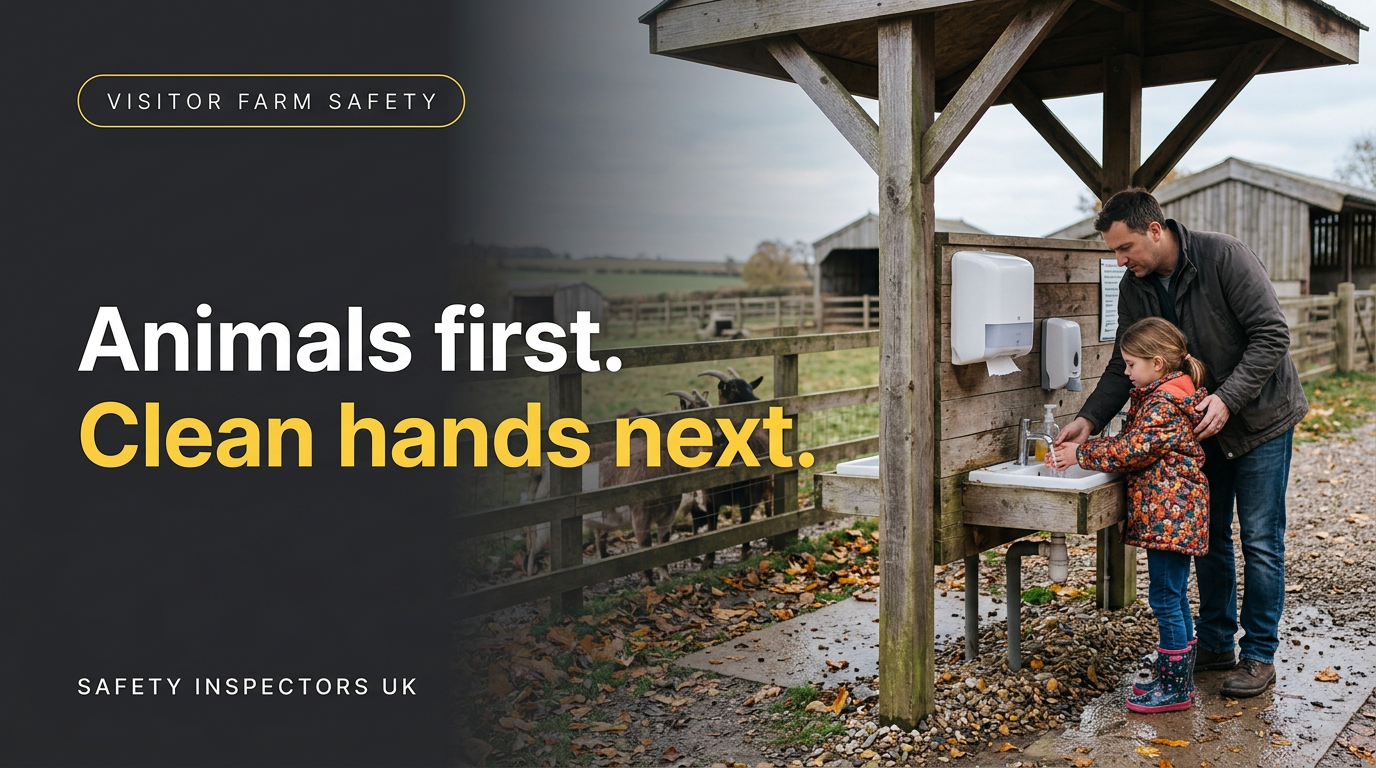
HSE’s guidance for open farms and visitor attractions says washing facilities should accommodate the numbers expected to use them at the same time. They should provide running water, preferably warm, soap and paper towels.
Try the taps and dispensers as a visitor would. Can a child reach them safely? Can an adult help without blocking everyone else? Consider people using wheelchairs or pushing buggies. A facility that exists on the site plan may still be awkward to use.
Compare the arrangement with your booking pattern. Two groups finishing an activity together may create a queue even when the overall visitor limit is modest. Consider staggering activities or providing suitable additional facilities where your assessment identifies a need.
Ask staff to observe the queue during a busy session. Record whether people wait, abandon it or misunderstand where to go. Use that observation to improve the arrangement rather than assuming another sign will solve the problem.
Walk the visitor route with a fresh pair of eyes.
A workplace inspection can help identify practical problems with access, facilities, responsibilities and follow-up actions across your attraction.
Explore health and safety inspections ↗Keep animal contact and eating arrangements separate
HSE advises against allowing eating where animals can be touched, and says food sales should come after visitors have passed animal-contact areas and washing facilities. Make the intended sequence obvious in the layout and the visitor information.
Review temporary changes as carefully as the permanent arrangement. Moving a refreshment stall, opening an extra gate or relocating an animal enclosure can alter the route. Ask the duty manager to check the complete journey before the changed area opens.
Brief staff on how to give a friendly, consistent reminder when visitors bring snacks into an animal area. Make sure they can direct people to the designated eating space and washing facilities, rather than simply telling them to stop.
Decide what happens when a tap or dispenser fails
Name who checks water, soap, towels, cleanliness and access before opening, and who repeats checks during the day. Choose a frequency that reflects use and conditions; a fixed once-a-day tick may miss a dispenser emptied by the first group.
Keep replacement supplies accessible to the staff who need them. Record faults with an owner and a completion time. Explain who can authorise a change to the visitor route or pause an affected activity.
If suitable washing facilities are unavailable, do not treat hand gel as the backup. Put the affected animal-contact activity on hold or use an assessed alternative arrangement that provides proper washing before allowing contact to continue. Make the decision before visitors enter the area.
Include this in the staff handover: what is out of use, what alternative is operating and who will confirm the normal arrangement is ready again. A repair message sent to maintenance does not tell the next shift what visitors should do.
Five checks before the next group arrives
- Walk the route: follow each animal-contact exit to washing and eating areas.
- Test the facilities: check water, soap, towels and safe, practical access.
- Allow for groups: consider how many people will need to wash together.
- Brief the team: agree visitor reminders, replenishment and fault reporting.
- Check the fallback: know who can pause contact or arrange a suitable alternative.
Keep a short action list from the walk-through. Prioritise anything that prevents proper washing, assign responsibility and check the fix during normal use.
Make the safer route the obvious route.
Tell Safety Inspectors UK where your visitor arrangements become difficult on busy days. We can discuss an inspection or practical risk assessment support for your premises.
Discuss your visitor safety arrangements ↗For ongoing action tracking, explore our retained health and safety support.
Sources checked: 22 November 2026. HSE guidance for Great Britain and UKHSA public advice are linked above. UKHSA’s guidance was updated on 5 March 2026. This is practical management guidance for venues in England, not a statement that the law has changed. Use it alongside your site-specific assessment and the industry code of practice linked by HSE.