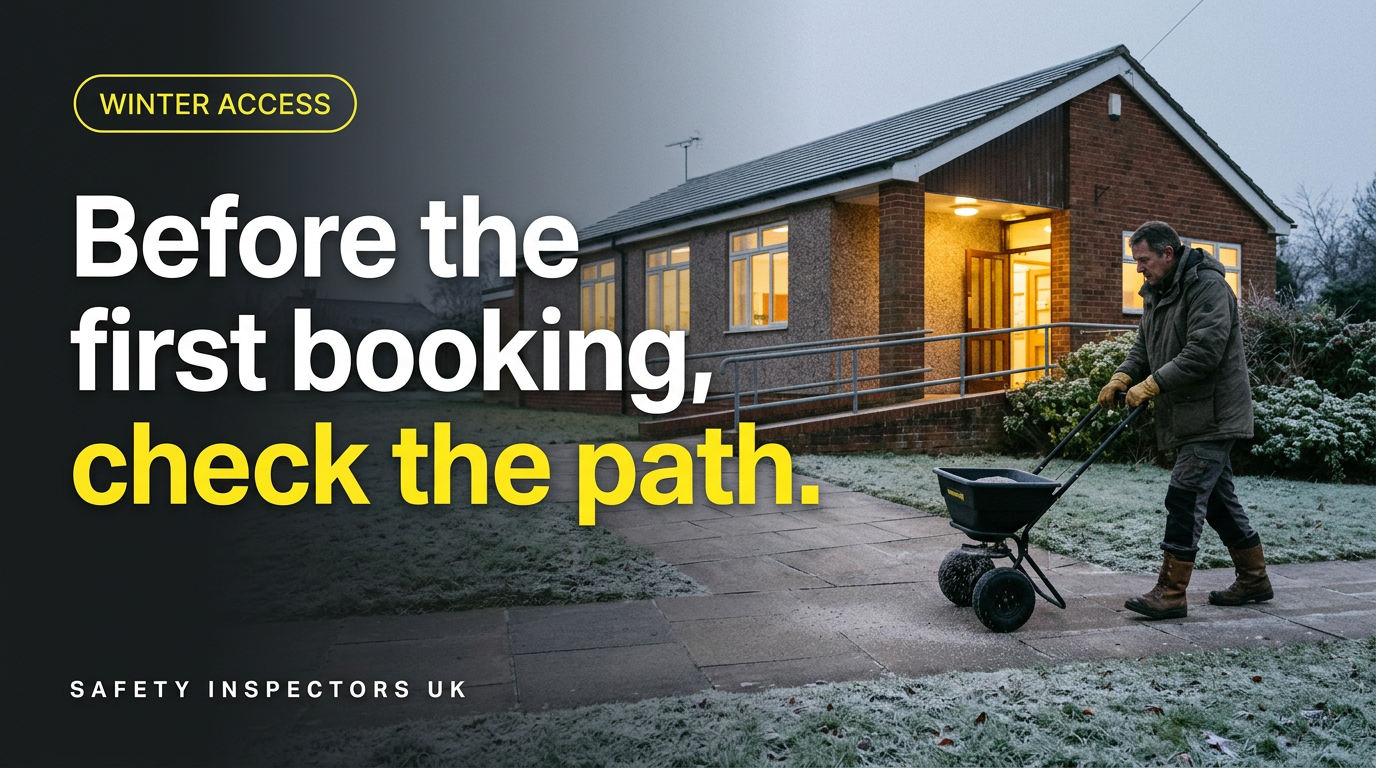
The heating is on and the room is ready. Outside, the shaded path from the car park is still slippery. For a community centre manager, opening the building safely starts before anyone reaches the door.
A bag of salt in the store is useful only if somebody knows when to use it, which routes matter and who checks the result. Build the winter plan around the first arrival and the last departure, including staff, volunteers, visiting tutors and people attending evening groups. This is practical guidance for community premises in Great Britain, with straightforward application across the North East.
Map the journey to the door
Walk the approaches people actually use. Include parking spaces, drop-off points, gates, ramps, steps and the route to the entrance. Mark places that remain shaded, collect water or become shortcuts. Check the return journey too: the door used after an evening activity may differ from the main daytime entrance.
Choose priority routes that provide a usable approach for the people attending. A diversion that depends on steps may leave someone unable to enter. Ask regular groups about access needs before bad weather arrives, and check that barriers or stored snow will not narrow the route unexpectedly.
Where a landlord, council or contractor maintains part of the approach, agree the boundary of each party’s work. Put the contacts and responsibilities on the same simple plan. Do not assume treatment of the adjacent road includes your car park or the path through your grounds.
Act before the arrivals, then inspect again
HSE advises gritting when frost, ice or snow is forecast, or when a walkway is likely to be wet and its surface temperature is at or below freezing. Its guidance identifies early evening and early morning, before staff arrive, as useful treatment times. Salt needs time to work; spreading it as a group queues at the gate is a poor substitute for planning.
Assign someone to review the forecast and local conditions, with a named deputy for leave or sickness. Link this task to the booking diary. An unusually early class or weekend event needs the same access arrangements as a normal weekday opening.
Check the surface after treatment and whenever conditions change. Heavy rain can wash salt away, while compacted snow is harder to treat effectively. A completed morning entry does not establish that a shaded ramp remains safe after dusk. Record the next check and who will make it.
Check the approach as well as the building
Our health and safety inspections can help premises managers identify access hazards and turn findings into clear actions, responsibilities and review dates.
Make treatment practical for the person doing it
Keep suitable treatment material and equipment accessible before the opening shift. Check stock, storage and instructions for the product and surfaces involved. Agree a manageable method of moving supplies rather than expecting one person to struggle with heavy bags in poor conditions.
GOV.UK advises clearing fresh snow early and avoiding water, which can refreeze into black ice. Pay particular attention to steps and steep paths. When moving snow, keep pedestrian routes and drains clear, as the Met Office’s Snow Code explains.
Check lighting while the route is dark. HSE notes that insufficient light makes floor and stair hazards harder to see. A defective entrance light deserves a repair action; treating the ground will not correct it. Keep leaves and debris under review alongside ice so that winter checks do not become a single-task salt-spreading routine.
Give someone authority to change the plan
HSE’s workplace guidance says employers must minimise risks from snow and ice on outdoor routes. The Workplace (Health, Safety and Welfare) Regulations provide the legal framework for most workplaces; HSE’s practical advice describes ways to manage the risk. This article is not a new rule or a forecast for a particular day.
If a route cannot be made safe, restrict access and direct people to a suitable alternative. Make the decision before visitors reach the hazard. If there is no safe arrangement for the booking, the manager needs authority to delay opening or change the activity. Do not compromise required emergency escape arrangements when closing a route.
Tell the group organiser exactly which entrance to use and whether arrangements have changed. Keep the message short and consistent with signs on site. A warning message supports the physical controls; it does not remove the need to deal with the hazardous route. Remove temporary warnings once the hazard has passed.
A six-point opening and evening check
- Bookings: first arrivals and final departures are covered.
- Routes: approaches, ramps and steps have been checked.
- Treatment: the result has been inspected, not just the task recorded.
- Access: any alternative route is suitable and clearly communicated.
- Equipment: lighting, supplies and tools are ready for the next check.
- Handover: one named person knows what remains and when to review it.
Put the winter plan into the booking routine
Start with a route map, a named deputy and one clear opening decision. If your premises checks need ongoing coordination, our retained safety support can help you organise actions and follow-up.
Sources and scope
Source check: 19 November 2026. Evergreen winter planning advice, not a report of an incident or current weather warning.
- HSE: Ice, frost and gritting guidance
- HSE: The law on workplace safety
- HSE: Lighting and environmental slip risks
- GOV.UK: Clearing snow and ice
- Met Office: The Snow Code
Cover: AI-generated illustration of a fictional community centre; not a customer site or real incident.