Managing traffic when the layout changes · 5 minute read
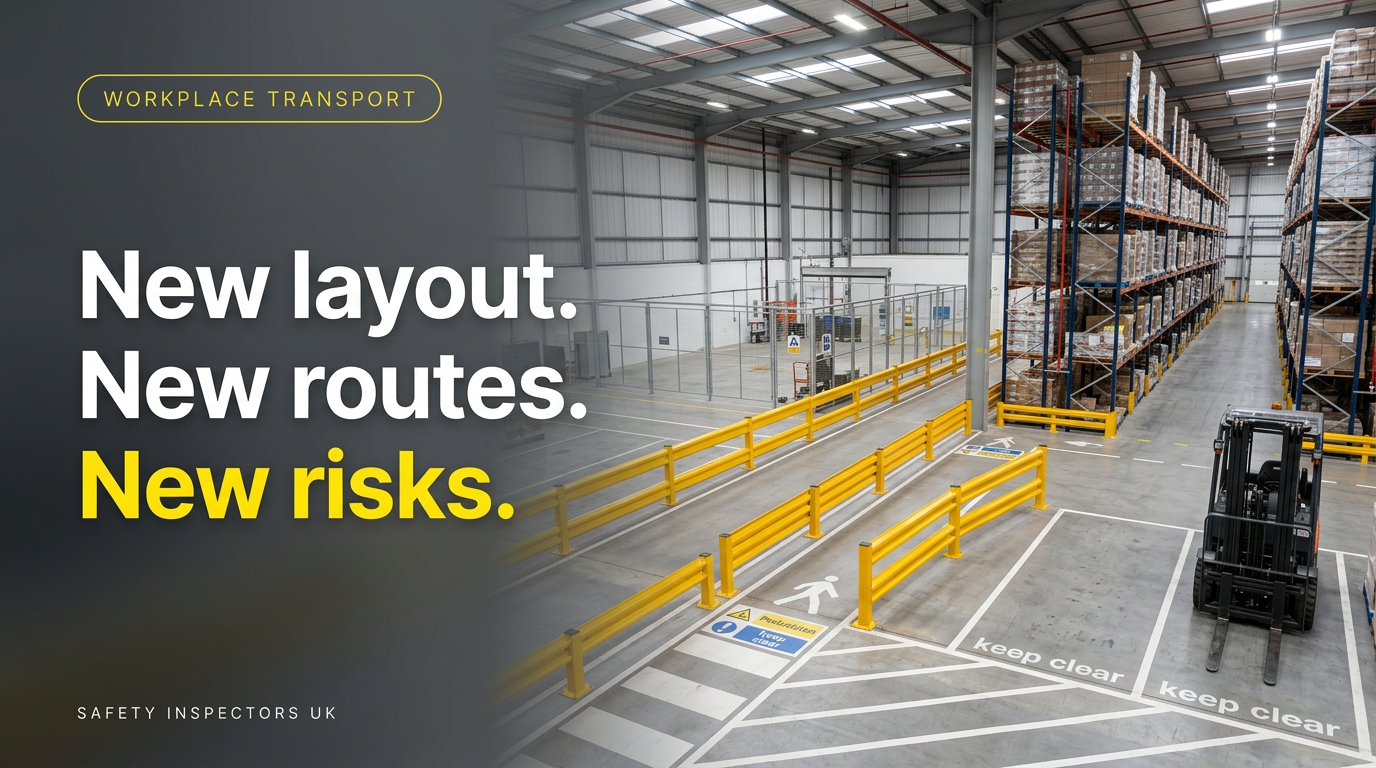
The installation area is fenced off. Where does the displaced traffic go?
A new machine, temporary stock area or blocked aisle can change how a warehouse operates long before the project is finished. Forklifts take a different turn. Pallet trucks share a narrower lane. Someone’s usual walking route now leads towards a loading area.
The project plan may explain how the equipment will be installed without explaining how everyone else will work around it. Before approving a temporary diversion, check the effect on the whole operation.
The project was not the only risk
HSE’s release of 23 October 2026 reported a collision at Leggett & Platt Components Europe Limited’s Barnsley warehouse. The incident happened on 14 November 2024, while new automated machinery was being installed.
A worker using a ride-on pallet truck collided with a forklift and suffered foot fractures and nerve damage. HSE found that altered routes brought both vehicle types into the same busy stock-loading area, with restricted visibility and increased movements. The company had not properly assessed the route changes before introducing them.
The company pleaded guilty to breaching section 2(1) of the Health and Safety at Work etc. Act 1974 and was fined £80,000 at Leeds Magistrates Court on 20 October 2026. This was a Yorkshire incident, not a North East case. Its practical lesson applies wherever a project changes everyday traffic.
Draw the movements that will actually happen
HSE’s workplace transport risk-assessment guidance requires employers to assess risks and take appropriate preventive measures. It recommends looking at the site, vehicles and drivers, including less frequent activities. A plan can help identify where movements meet.
Mark the closed area and proposed diversion on a current layout. Add forklift movements, ride-on and pedestrian-operated pallet trucks, pickers, cleaners, contractors and visiting drivers. Include waste collection and replenishment rather than considering dispatch alone.
Then ask what happens at the busiest point. Can two vehicles meet at a blind corner? Will a waiting load obstruct the view? Does the diversion require a manoeuvre that was previously unnecessary? Discuss these questions with operators and supervisors before deciding the route is usable.
Keep people out of vehicle movements
HSE’s guidance on separating people and vehicles explains the legal requirement for traffic routes to be usable without endangering people nearby. It recommends separate pedestrian and vehicle routes wherever possible and attention to doors, crossing points and the paths people naturally take.
Check where the revised walking route starts and ends. A protected section is of limited value if it delivers someone into a vehicle lane at the next doorway. Choose suitable separation and crossing arrangements for the assessed risk; a new painted line alone does not establish that the route is safe.
Keep the route practical. If staff must take an unexplained detour to reach welfare facilities or collect paperwork, ask whether the arrangement encourages shortcuts. Resolve that during planning and explain the agreed route clearly.
Check the layout where the work happens.
Our workplace inspections can help managers identify practical issues, prioritise improvements and turn findings into clear actions.
Explore health and safety inspections ↗Check more than the arrows on the floor
HSE’s traffic-route guidance highlights junctions, bends, restrictions, surfaces and obstructions. A diversion needs to suit the vehicles and loads using it, including the space needed to turn safely.
Look from the operator’s position as well as from the drawing. Temporary screens, stacked materials and parked equipment can change sight lines. Check lighting, signs and the space around corners. Do not use a live encounter between vehicles as the first test of whether the design works.
Name a person who can approve the arrangement before it opens. Record unresolved issues and keep the affected route controlled until those issues have been addressed. If safe operation cannot be maintained alongside installation work, change the sequence or timing of the work.
Six checks before opening the changed route
- The assessment covers the diverted traffic, not just the installation area.
- Vehicle conflicts, visibility and turning space have been checked.
- Pedestrian access, crossings and doorways remain protected.
- Barriers, signs and markings match the agreed layout.
- Every affected shift and relevant contractor knows the change.
- An owner, review date and process for reporting problems are recorded.
Give the temporary arrangement an end point
Brief the people who were absent when the change was introduced. Show them the route rather than relying only on a notice at the clocking-in point. Tell staff who to contact if stock blocks the lane or the route no longer matches the plan.
Review the arrangement after it starts operating and whenever the project moves to another stage. For North East warehouse managers, this is the same national risk-management principle applied to the actual site, shifts and workload. When the project finishes, check the restored layout before removing temporary controls.
For ongoing action tracking and management support, see our retained safety services.
Planning a warehouse change?
Tell us what is changing, which activities must continue and where the proposed routes meet. We can discuss the practical safety support your team needs.
Request safety support ↗