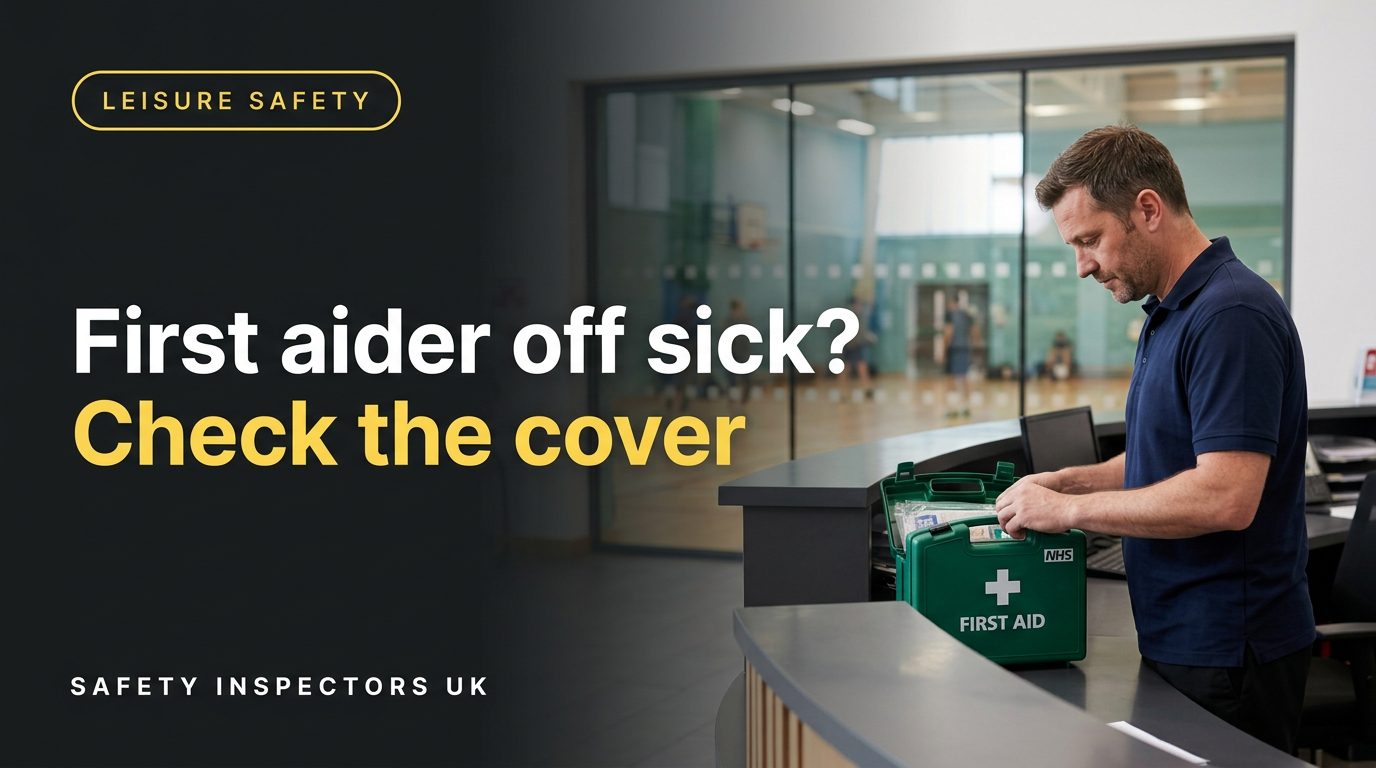
The first aider calls in sick. The reception desk is staffed and the classes are booked. Who checks whether the centre can still operate with the cover available?
A training spreadsheet tells you who holds a qualification. It does not tell you who is present, reachable and able to leave their normal duties at eight o’clock tonight. For leisure-centre managers, that gap belongs in the shift plan.
This is an evergreen guide for North East leisure businesses using current HSE guidance for Great Britain. The checks below are practical management suggestions, not a new local rule or a fixed staffing formula.
Start with the needs assessment
The Health and Safety (First-Aid) Regulations 1981 require employers to provide adequate and appropriate equipment, facilities and personnel for employees who become ill or are injured at work. HSE says the provision should follow an assessment of the workplace, workforce and risks.
Work patterns, holidays and other absences are explicit assessment considerations. There is no universal number of first aiders that fits every leisure centre. Review your opening hours, staff distribution, activities and accident history, rather than borrowing another venue’s headcount.
The First-Aid Regulations do not themselves require provision for non-employees, but HSE strongly recommends including the public in the assessment. That distinction does not remove wider duties towards people affected by your work. A leisure centre should consider members, visiting teams and spectators alongside staff.
Map people against the whole operating day
Put the actual rota beside the needs assessment. Include early cleaning, evening classes, weekend bookings and work after the public leaves. Identify who provides the assessed cover during each period and where they will normally be.
Look for gaps concealed by a daily total. Two qualified people on the morning shift do not cover an evening shift automatically. A person working at another site may be listed on the same spreadsheet but unavailable when needed.
Consider competing responsibilities. If the nominated first aider is supervising an activity, agree how that activity will be made safe while they respond. Do not assume that a lifeguard can leave pool supervision; specialist pool and rescue arrangements need their own assessment. This guide does not replace them.
Check the arrangements in the building
Our health and safety inspections can help you review how written arrangements work across your premises and day-to-day activities.
Give the duty manager a workable decision
Before the next absence, agree who can arrange replacement cover and who decides whether activities need to change. The decision should follow the assessed needs and actual circumstances, not pressure to keep every booking running.
A useful sequence is to identify the gap, confirm suitable replacement cover, brief the team and record the decision. Where adequate arrangements cannot be maintained, restrict or suspend the affected work or activity until a safe arrangement is in place. Make the escalation contact available outside office hours.
Keep roles clear. An appointed person looks after first-aid arrangements and calls emergency services; they are not automatically a trained first aider. HSE allows emergency cover within an appointed person’s role and competence for unforeseen absence. That is not a reason to replace assessed trained cover routinely with an untrained colleague.
Test the route from an incident to help
Ask a member of staff how they would summon assistance from the sports hall, changing area or outdoor space. Check that the communication method works there and that the person receiving the message knows the location.
Keep first-aid equipment accessible, check supplies frequently and replenish them after use. Where your assessment includes additional equipment, allocate checks and follow the manufacturer’s instructions. A locked room or a missing key can undermine an otherwise sensible plan.
Include practical access details in the briefing: the site address, the entrance emergency services should use, who meets them and how that route is kept available. Use a short walk-through without pretending there is a real emergency. Record any obstacles and allocate someone to resolve them.
Five checks before the shift starts
- People: Is the assessed cover present for all working hours, including breaks?
- Competence: Are the relevant qualifications current and suitable for the assessed needs?
- Contact: Can everyone summon help from their working area?
- Equipment: Are kits and any assessed additional facilities accessible and ready?
- Fallback: Who authorises changes if cover becomes unavailable mid-shift?
Keep the shift record proportionate: names, hours, any gap, the action taken and the person responsible. HSE says recording the needs assessment is useful even though its findings do not have to be recorded. A clear record also helps the next manager understand your decisions.
Review the arrangements when opening hours, activities or staffing change, and after incidents expose a weakness. Book replacement training early enough to maintain cover. The aim is a reliable response throughout the working day, not simply a full column of certificates.
Make cover part of routine management
For help reviewing responsibilities and following up actions, explore retained safety support. Tell us about your activities, hours and current arrangements.
Request help with your workplace