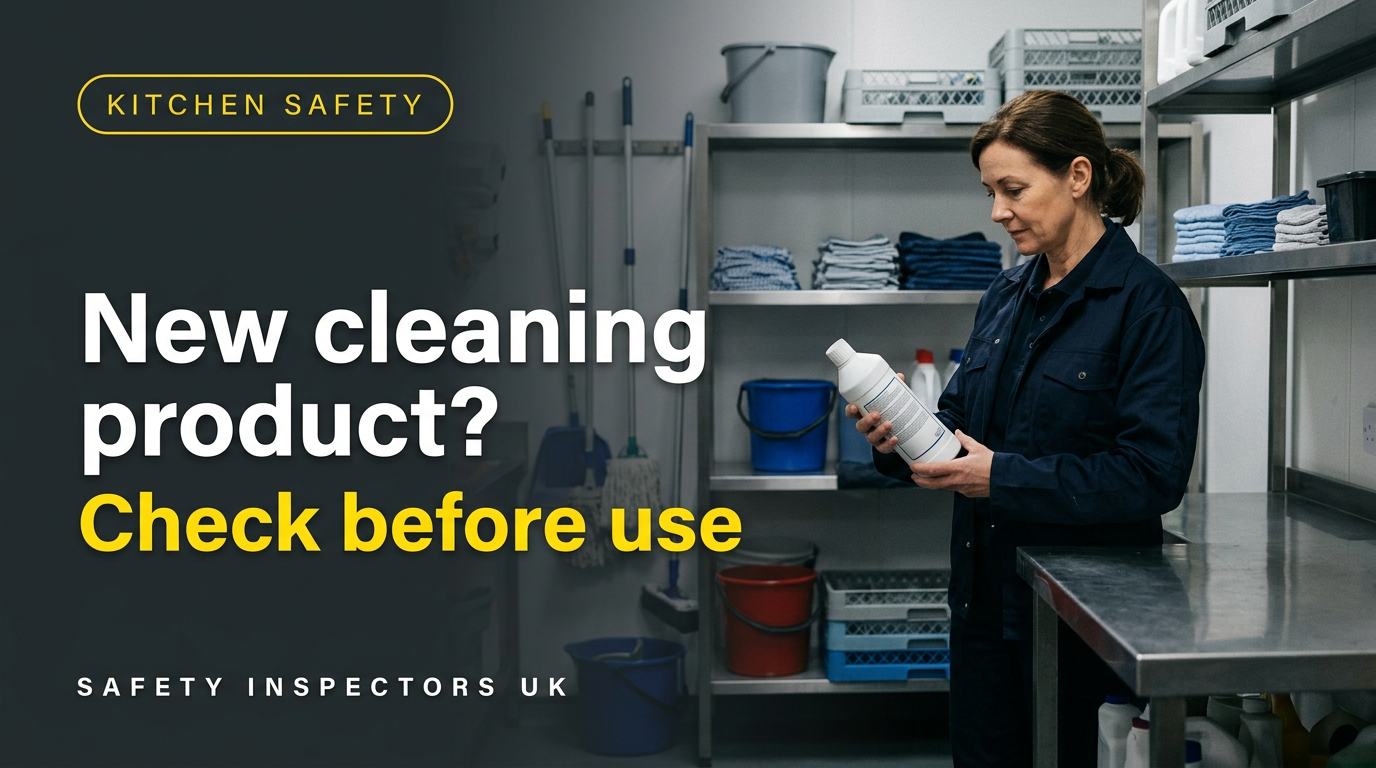
The usual kitchen cleaner is out of stock. A substitute arrives with the delivery. Does it go straight onto the shelf?
A different bottle can bring different dilution instructions, exposure risks and storage requirements. The problem starts when purchasing treats it as an equivalent product but the kitchen team carries on using the old method.
For restaurant and catering managers across the North East, a simple approval check can stop that gap reaching the evening clean-down. This guide applies current HSE guidance for Great Britain to an everyday purchasing decision. It is not a new regulation or a report of a local incident.
Start with the job and the exposure
COSHH requires employers to assess risks from hazardous substances, prevent exposure where reasonably practicable and otherwise control it. The assessment also needs to address storage, handling, disposal and emergencies. Staff need information, instruction and training on the risks and precautions.
The safety data sheet helps you make that assessment; it is not a description of how your kitchen actually works. HSE explains that it provides information about hazards, handling, storage and emergency measures. Match the information to the exact product received, rather than keeping a sheet for a similarly named cleaner.
Ask what the cleaner is needed for, who uses it, how often and where. A concentrated product poured at a small sink presents a different task from a ready-to-use product applied by cloth. Consider splashes, skin contact and anything staff could breathe in.
Check the substitute before it reaches the cleaning station
Give the delivery team a clear rule: unfamiliar cleaning products go to a nominated manager for review, not directly into use. Keep them securely stored according to the supplier’s instructions while the decision is made. A temporary hold is easier to manage than finding the product in several unlabelled bottles later.
Compare the label, safety data sheet and supplier’s use instructions with the existing assessment. Check concentration, application method, ventilation, protective equipment, incompatible substances and emergency arrangements. Ask the supplier to resolve missing or conflicting information before approving use.
Also confirm that the product is suitable for the intended cleaning or disinfection task. Do not assume that a less hazardous alternative will meet the same hygiene requirements. Where a safer product or ready-to-use form is suitable, consider it as part of reducing exposure.
Does the cleaning routine match the assessment?
A health and safety inspection can help identify gaps between written controls, storage arrangements and the way staff carry out the work.
Make the safe method easy to follow
Use the manufacturer’s instructions for dilution and application. Do not carry over a familiar number of capfuls from the previous product or assume that a stronger solution works better. Check that any dosing equipment is suitable for the replacement and that staff know how to use it.
HSE’s hospitality guidance says never to mix cleaning substances. It warns that some combinations, including bleach with acidic cleaners or ammonia, can release harmful gases. Do not top up a partly filled container with a different product or improvise a mixture to finish a difficult job.
Keep products in suitable, clearly identified containers. Never put cleaning chemicals into food or drink containers. Review storage compatibility and keep chemicals away from food, heat and public access as the manufacturer directs. Plan the changeover so old stock, labels and instructions cannot be confused with the replacement.
Select gloves and any eye or other protection for the actual substance and task. A box of general-purpose gloves is not evidence that protection is suitable. Check the product information and assessment, provide the identified equipment and show staff how to use, check and replace it.
Brief the whole team, including the late shift
A note in the manager’s folder will not reach everyone. Explain what changed, demonstrate the agreed method and ask the user to show you how they would carry it out. Include agency staff, weekend cover and anyone who replenishes the cleaning station.
Make emergency information accessible where it is needed. Staff should know how to raise the alarm, get first-aid or emergency help and follow the product-specific instructions if exposure or a spill occurs. Do not expect an untrained person to tackle an unknown spill or enter an area with harmful fumes.
A six-point approval check
- Exact product identified and current supplier information available.
- Task and COSHH assessment reviewed by someone competent to do so.
- Suitability, dilution, application and dosing arrangements confirmed.
- Storage, labelling, ventilation and protective equipment checked.
- Spill and exposure arrangements understood and available.
- All affected staff briefed before first use, with a named follow-up owner.
Record the decision and replace outdated instructions at the point of use. Observe the first clean-down with the new product and ask staff about difficulties. If the controls cannot be followed in practice, pause use and resolve the problem rather than treating the briefing as the end of the job.
Keep purchasing and safety connected
Our retained safety support can help turn product changes and assessment reviews into a manageable routine. Tell us what your team uses and where the current process breaks down.
Request workplace safety support