CLIENT SPOTLIGHT · RESPIRATORY PROTECTION
It was a crisp, frosty morning in Darlington, but we received a warm welcome from the Ethosis team.
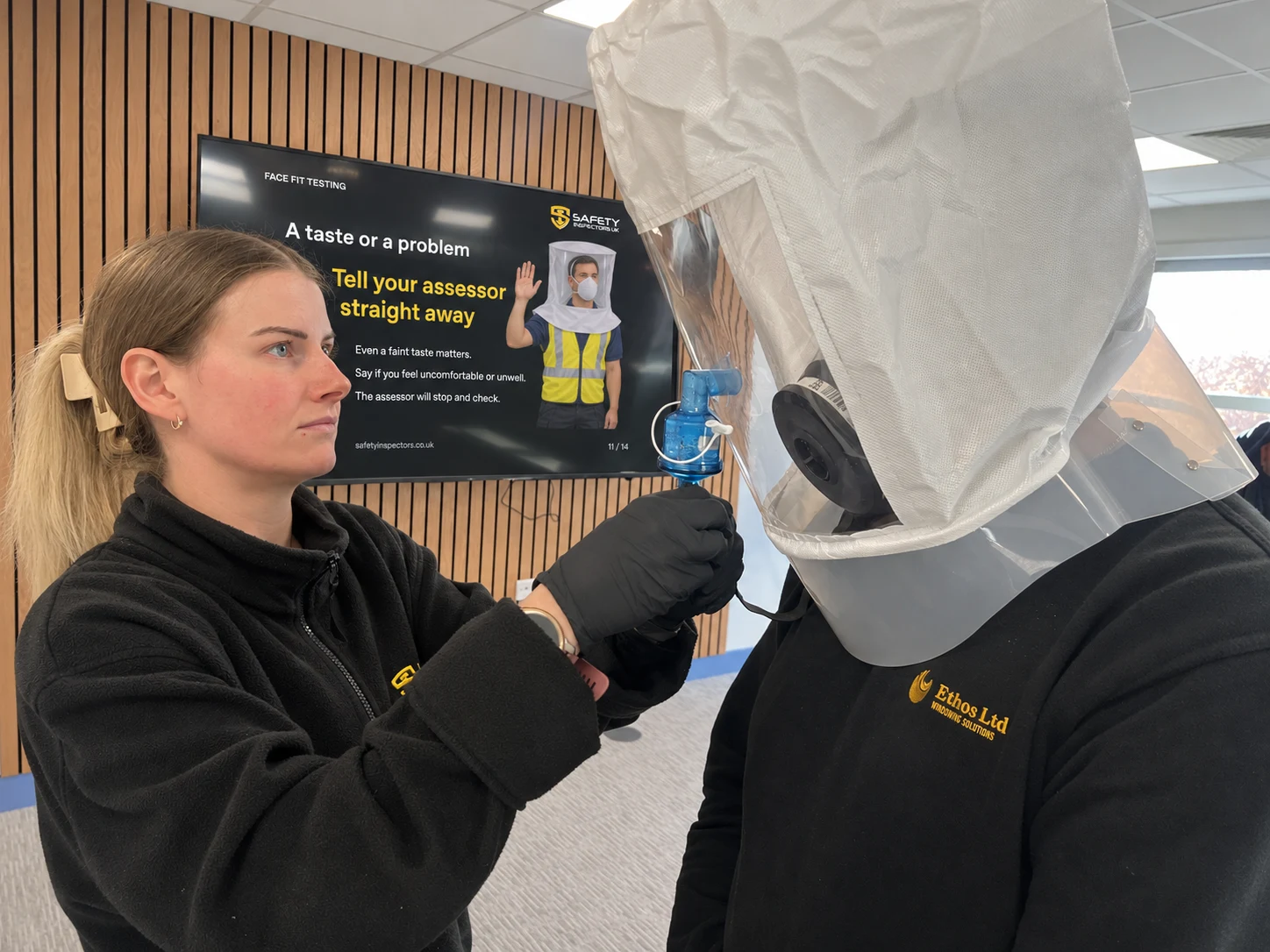
This morning, Friday 13 November 2026, Safety Inspectors UK visited Ethosis at their Darlington office to carry out on-site face fit testing. The visit was an opportunity to support the people behind the business with practical respiratory protection and clear guidance on looking after their RPE.

About Ethosis: fire safety expertise from Darlington
Ethos Innovative Solutions, referred to here as Ethosis, is a Darlington-based business providing fire door surveys, remedial repairs, replacement programmes and passive fire protection services across the UK.
Its work includes fire stopping and compartmentation, helping clients manage the fire protection measures within their buildings. That makes protecting the people carrying out the work a particularly relevant part of today’s visit.

Why face fit testing matters
Tight-fitting respiratory protective equipment (RPE) relies on a good seal against the wearer’s face. Faces vary, so the same respirator will not necessarily fit everyone. A face fit test checks a specific make, model and size of mask on the individual who will use it.
HSE’s fit testing guidance explains why the facepiece that passes the test should be the one made available to that wearer. If someone uses different tight-fitting masks, each needs its own fit test. The test record and the equipment issued need to match.
Qualitative face fit testing at the workplace
SIUK provides qualitative face fit testing for FFP2, FFP3 and suitable reusable half masks. An initial sensitivity check confirms that the wearer can detect the test agent. The wearer then completes a guided sequence of exercises while wearing their respirator under the test hood.
Our service includes an individual record identifying the wearer, the facepiece tested and the result. Full-face masks require an appropriate quantitative test, which is outside our current qualitative service. HSE’s INDG479 guidance explains the different fit testing methods.
Understanding the test and feeling prepared
Our face fit presentation explains why the test is needed, what to expect and how wearers can help the assessor carry it out properly. It also supports discussion about correct respirator use and ongoing RPE care.
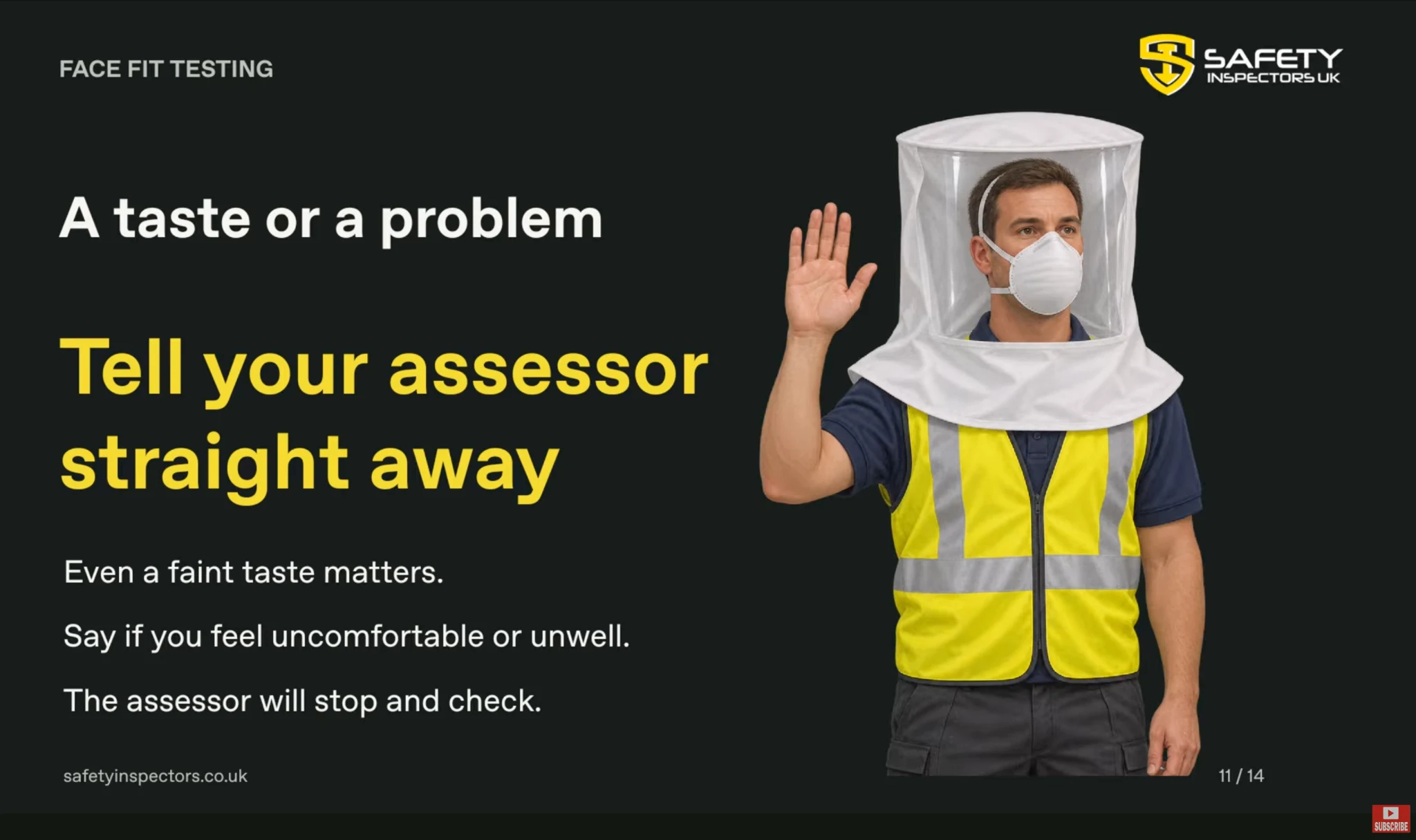
One clear message from the briefing is to tell the assessor straight away if the test agent can be tasted, even faintly, or if the wearer feels uncomfortable or unwell. We want people to understand the process and feel able to speak up.
Need the same support for your team?
Arrange on-site face fit testing with SIUK. Tell us where your team works, how many people need testing and which respirators they use, so we can plan the visit with you.
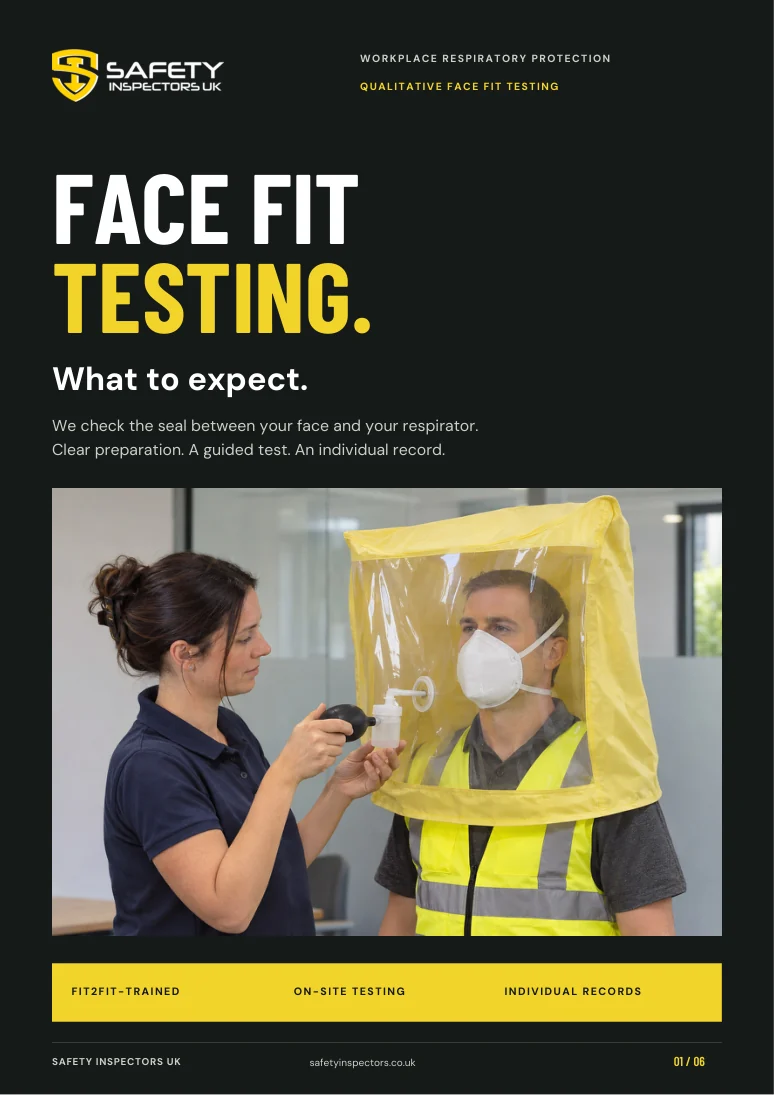
Help your team arrive prepared.
Our six-page Face Fit Testing: What to Expect brochure explains preparation, the appointment, the test exercises and what happens afterwards. Share it with staff before their appointment.
Download the face fit brochure (PDF) ↓Looking after RPE after the face fit test
A successful test is the start of good day-to-day use. Wearers still need to follow the manufacturer’s instructions and look after their equipment:
- Fit and check it each time. Use the tested make, model and size. Keep the sealing area free of facial hair and perform a wearer seal check whenever the respirator is put on. A seal check does not replace a face fit test.
- Inspect before use. Check the facepiece, straps, valves and filters, where fitted, and report damage or problems before using it.
- Clean, maintain and store it properly. Follow the manufacturer’s instructions for reusable RPE, replacement filters and clean storage. Follow the specified replacement and disposal instructions for disposable masks.
- Review changes. Changes to the respirator, facial features or other PPE that affect the seal may mean another fit test is needed.
Fit testing checks the seal; selecting RPE and filters suitable for the hazard and task remains essential. Our face fit service page links to HSE’s INDG479 and HSG53 guidance on respiratory protective equipment at work.
DARLINGTON · TEESSIDE · NORTH EAST
Book face fit testing in Darlington and the North East
SIUK provides on-site face fit testing across Darlington, Teesside and the wider North East. Send your postcode, number of wearer-and-mask combinations, respirator details and preferred dates so we can confirm the arrangements and price.
Company background: Ethos Innovative Solutions’ website. Technical references: HSE fit testing guidance, INDG479 and HSG53, linked above. Checked 13 November 2026. Feature photograph: our briefing slide has been added to the TV screen.