Dust extraction after workshop changes · 5 minute read
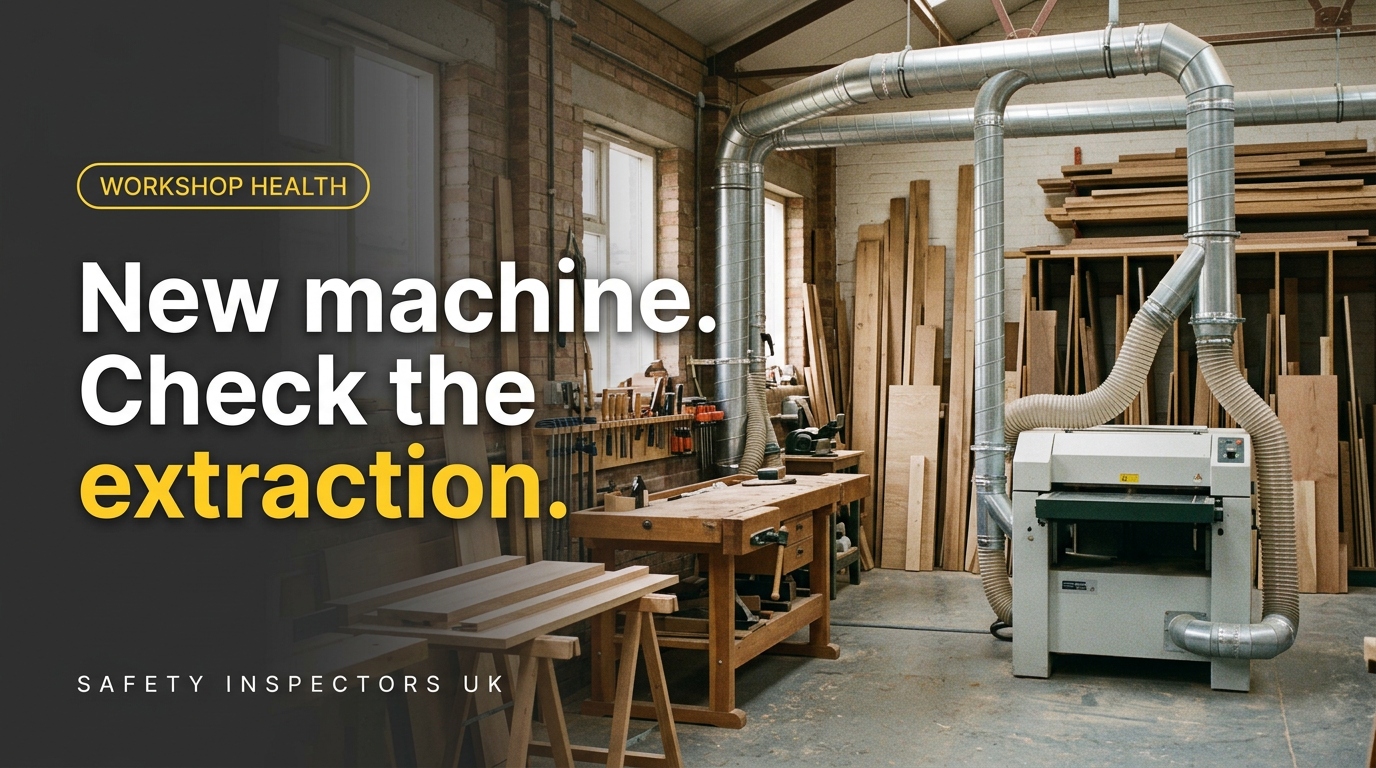
A new machine is ready to earn its place in the workshop. Is the extraction ready for it?
Connecting a hose is an installation step. It does not establish that dust will be captured properly when the workshop is busy. Adding a sander, moving a machine or changing which machines run together should prompt a review of the extraction arrangements before production starts.
For joinery and furniture businesses across the North East, build that check into the purchase and installation plan. The advice here draws on national HSE guidance for Great Britain; it is not a new local requirement.
Make dust control part of the purchase
HSE’s wood-dust guidance explains that wood dust can cause asthma and hardwood dust can cause cancer. COSHH requires employers to protect workers from exposure. Local exhaust ventilation, or LEV, captures dust near its source before it spreads.
Ask about extraction requirements when comparing machines, rather than after the delivery date is agreed. Include the cost and time needed for competent design advice, installation, checks and training. A cheaper machine can still require changes elsewhere in the system.
Give one manager responsibility for the handover. That person should know who is confirming extraction performance, who will resolve defects and what evidence is needed before the machine enters normal use.
Describe how the workshop will actually run
HSE says extraction design should account for the number and type of connected machines, those used together and the workshop layout. Supply the specialist with the machine manufacturer’s extraction information and an accurate description of the proposed work.
Make a simple change list: new connection, relocated machine, longer hose, different material, extra shift or simultaneous use. Mark what is planned and what is already installed. Photographs and a marked layout can help prevent an assumption being mistaken for an agreed design.
Explain peak demand. Testing a single machine in an otherwise idle workshop may not represent the operating combination you intend to use. Ask the specialist to confirm the permitted combinations and any restrictions in plain language.
Ask for evidence you can use
HSE’s commissioning guidance, updated on 21 May 2026, explains how commissioning demonstrates control and establishes a benchmark for future checks. Before using LEV, it should be checked for suitability for the process and substances, correct installation and required performance.
Ask a competent LEV specialist what assessment or recommissioning the alteration needs. Request a clear conclusion about whether the changed arrangement adequately controls exposure, with operating conditions, test results, performance benchmarks and any outstanding defects.
Keep that information with the user manual and logbook. An invoice saying “extraction connected” is not the same as a report describing performance. If the conclusion is unclear, ask the specialist to explain it before authorising production.
Make the workshop handover easier to manage
Our inspections can help review workplace arrangements, responsibilities and outstanding actions. Discuss any specialist LEV design or testing requirements separately.
Explore health and safety inspectionsGive operators a meaningful daily check
HSE’s LEV FAQs explain that feeling airflow by hand is not an effective way to judge hood airflow. Suitable indicators can help show whether performance is adequate. HSE recommends them, although there is no specific legal requirement to fit an indicator to every hood.
Have the specialist define the normal indication and the response to an abnormal reading. Show operators the relevant hood, hose, connections and controls on their own machine. Make reporting simple: identify the machine, describe the problem and contact the named supervisor.
If extraction is damaged or inadequate, stop the affected dust-producing work and obtain competent advice. Do not let a production deadline turn a temporary defect into the accepted way of working. Record the repair and verify performance before restarting.
Keep the controls working between examinations
Woodworking extraction needs competent thorough examination and testing at least every 14 months, alongside proper maintenance. That interval does not mean a changed or faulty system can wait until the next appointment. Follow the manufacturer’s maintenance instructions and the competent advice for your installation.
HSE advises using a suitable industrial vacuum of at least Class M for wood-dust cleanup, rather than sweeping or compressed air. Include cleaning equipment, waste handling and access for maintenance in the handover discussion.
Review the wider COSHH arrangements too. Extraction checks do not replace decisions about suitable respiratory protection or health surveillance. Obtain occupational health advice on surveillance for workers who may breathe wood dust.
Five questions before normal production
1. What changed? Keep an agreed list of machines, connections and operating combinations.
2. Who checked it? Confirm the specialist’s competence and scope of work.
3. What does the evidence say? Resolve defects and unclear conclusions.
4. Can operators spot a problem? Provide practical instruction and a named reporting route.
5. Who maintains the arrangements? Update manuals, records, maintenance tasks and the next examination date.
Plan the change before the delivery arrives
Bring your machine list and existing reports to the discussion. We can help you organise the management actions through an inspection or retained safety support.
Request support for your workshopSources checked: 16 November 2026. HSE sources are linked beside the advice above. This is an evergreen management guide, not a report of new legislation. Apply a task-specific assessment and competent technical advice.
Cover: AI-generated illustration of a fictional workshop, not a customer site or incident.