Practical induction for temporary housekeeping staff · 5 minute read
The room list is ready. The new housekeeper still needs to know how your hotel works.
A busy changeover can put pressure on a supervisor to hand over a trolley and get another person onto the floor. Experience at another hotel helps, but it does not tell someone where your supplies are kept, which equipment they may use or who responds when something is unsafe.
For North East hotels using agency or short-term cover, make the first shift a planned handover. This guide applies national HSE advice to a practical hotel management problem; it does not introduce a separate local rule.
Agree who does what
HSE explains that day-to-day safety responsibility during an assignment generally lies with the end user business, which directs the work and may control the premises. The supplier also has duties. Both sides need to cooperate rather than assume the other has covered everything.
Tell the supplier what the worker will actually do, the skills needed, the risks and the controls in place. Confirm who provides relevant training, equipment and supervision. If the agreed role changes, discuss that change before simply adding another task.
Keep one clear contact at the hotel and one at the supplier. A replacement arriving at short notice should trigger the same handover arrangements, not an assumption that the previous worker has passed everything on.
Prepare the first shift before the worker arrives
Put induction time into the allocation. Decide who will welcome the worker and who covers that responsibility if the supervisor is called away. Have the relevant instructions ready, along with the equipment and protective items identified by your assessments.
Use a short task list with three headings: work they can begin after instruction, work requiring further demonstration or supervision, and work outside the assignment. This is a practical planning aid, not a prescribed legal form.
Ask about relevant experience and any communication or support needs. Do not treat an agency booking, a confident manner or a previous hotel job as a substitute for checking suitability for the particular work.
Walk the route, then demonstrate the job
HSE’s new-starter guidance recommends planned induction, simple language, a workplace walkaround and checks that information has been understood. Apply that to the areas the person will actually use, rather than giving a tour with no connection to their shift.
Show the linen store, authorised supplies, staff facilities and the routes between them. Explain the local emergency arrangements, how to summon help and where to report a defect. Identify areas or tasks they must not enter or undertake without further instruction.
Demonstrate your assessed methods with the actual trolley, equipment and products provided. Explain how to recognise when a task is outside those instructions. For a damaged item, unfamiliar substance or unexpected condition, make the response clear: pause the task and contact the supervisor.
Does your induction match the real shift?
A workplace inspection can help compare written arrangements with how people are briefed, equipped and supervised on site.
Explore health and safety inspectionsAsk for a demonstration, not just a yes
Instead of asking “All understood?”, ask the worker to show where they would obtain help, identify the equipment they are authorised to use and explain what they would do if it were damaged. Keep the conversation supportive: you are checking the explanation as well as the learner.
If the answer is unclear, explain again using a demonstration, pictures or suitable language support, then recheck. Avoid adding more written material when the difficulty is understanding the existing instructions.
Record what was covered, what was demonstrated and what still needs support. A useful note might identify a particular task awaiting instruction and the person responsible for providing it. Avoid a blanket “fully trained” entry when only the general welcome has been completed.
Make the supervisor reachable
HSE requires adequate and appropriate supervision and highlights that new or inexperienced workers may need more support. Supervisors also need to understand the risks and the controls they are expected to oversee.
Name a person the new starter can actually reach, with cover during breaks. Check the contact method works on the assigned floor. Arrange an early check-in after the first tasks, rather than discovering misunderstandings at the end of the shift.
Review both safety and workload during that conversation. If the allocation cannot be completed using the agreed methods, change the plan. Encouraging questions only works when supervisors respond constructively and do not penalise someone for pausing to clarify a concern.
A first-shift checklist for the duty manager
Before arrival: confirm the role, relevant experience, risks and responsibilities with the supplier.
At handover: introduce the supervisor, explain emergencies and show the working areas.
Before independent tasks: demonstrate the agreed methods and check understanding.
During the shift: check progress, availability of support and any tasks needing further instruction.
At handback: record unresolved issues and tell the next supervisor what support is still needed.
Make safe handovers repeatable
Bring your induction checklist, task instructions and staffing arrangements to the discussion. We can help review your approach through an inspection or retained safety support.
Request support for your hotelSources checked: 16 November 2026. HSE guidance is linked beside the relevant advice. This evergreen guide concerns workplace safety in Great Britain, not the full employment-rights position. Use it alongside assessments of your own tasks and premises.
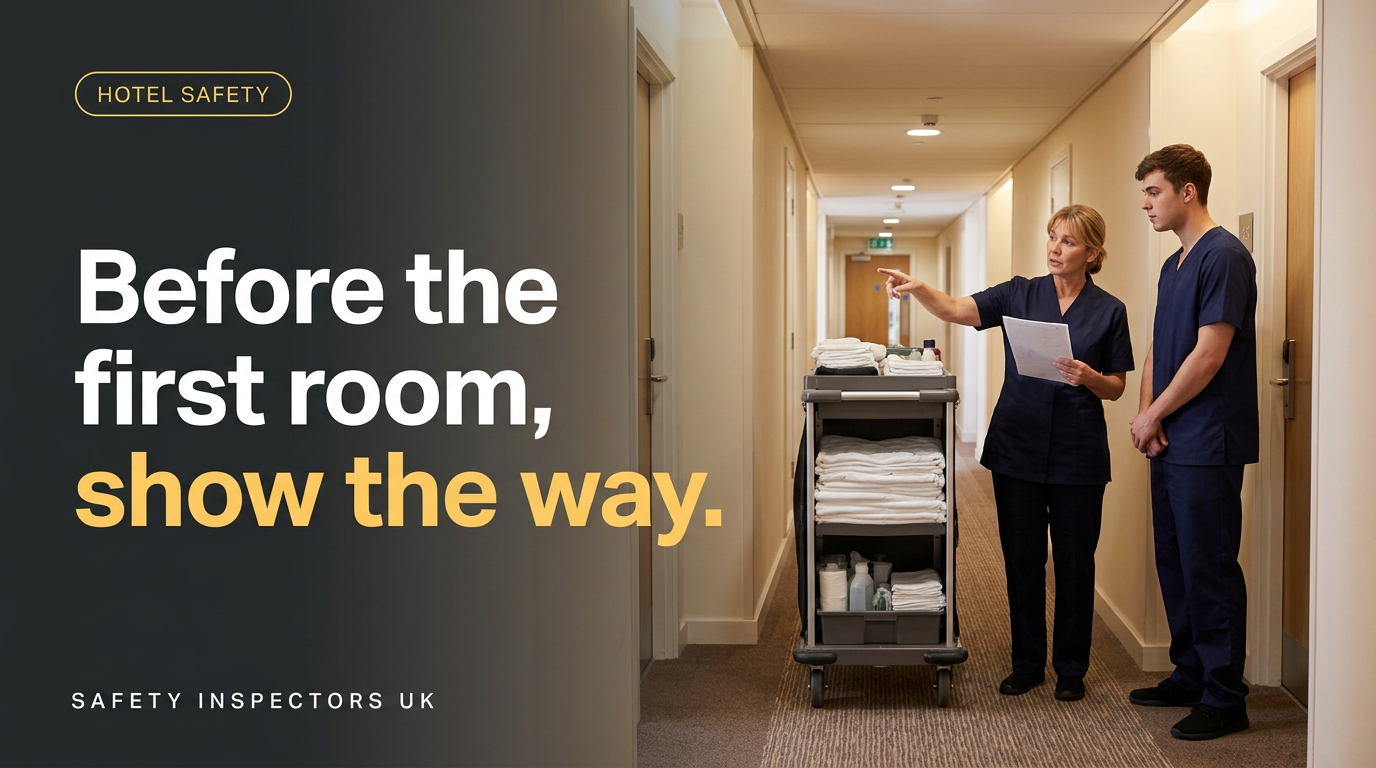
Cover: AI-generated illustration of fictional hotel staff and premises; not a customer or reported incident.