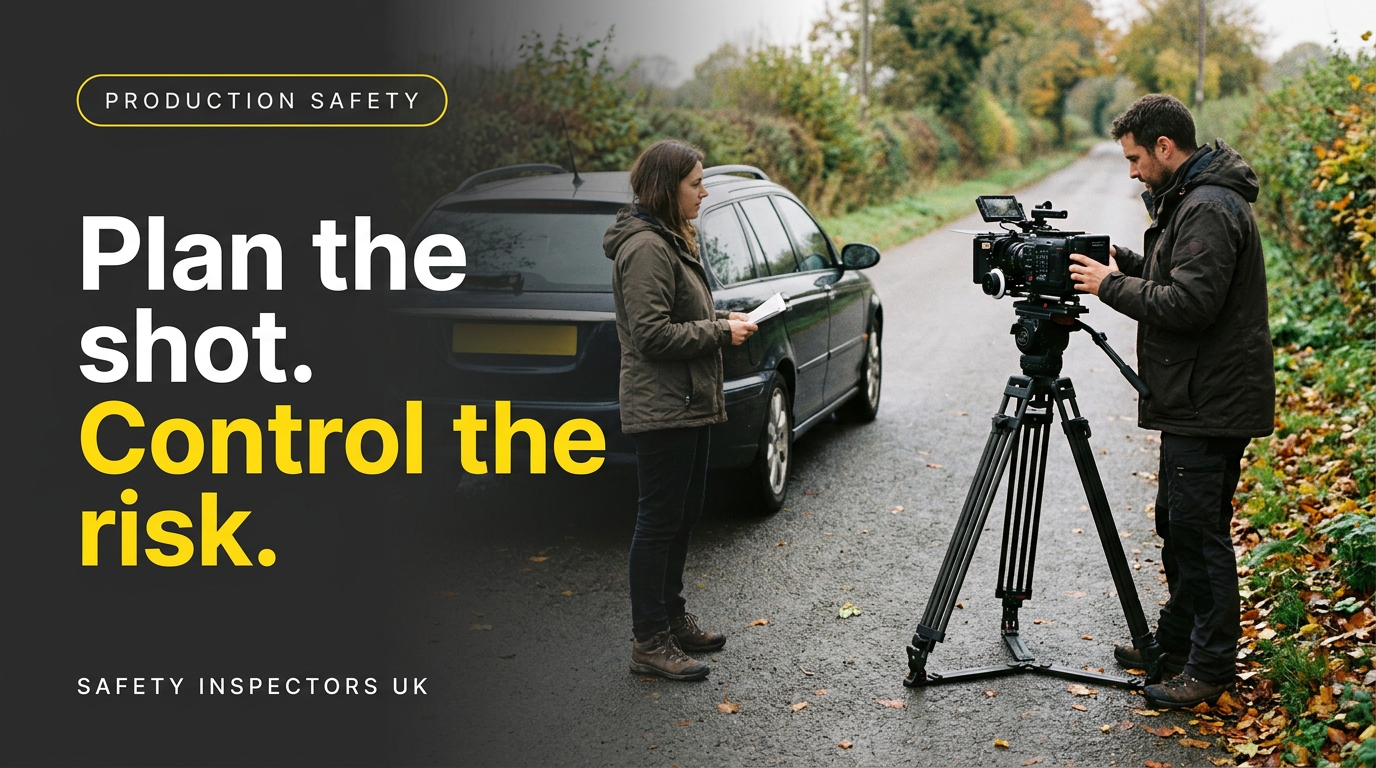
A client asks for one more moving shot. The planned filming is finished, the light is fading and a car is available. Who decides whether the new idea can go ahead safely?
For owners of video agencies and production companies, that decision needs a clear process. A useful starting rule is simple: a change of shot that changes the risk needs a pause, an assessment and a fresh briefing before anyone starts.
A changed plan, with lasting consequences
In a release published on 15 October 2026, HSE reported the prosecution of Superhub Ltd following an incident on 14 May 2021 in Paignton, Devon. After planned drone filming, additional footage was attempted from a moving car. An employee filming from the boot fell and suffered serious head and brain injuries.
Investigators found that the activity had not been risk assessed and the vehicle could not safely secure the worker and equipment. At Exeter Crown Court on 14 October 2026, the company was fined £45,000 and its director received a suspended prison sentence.
This was an English prosecution, not a new filming law. Its practical lesson is relevant to North East agencies commissioning product videos, vehicle reviews and location shoots: an extra request must enter the same safety planning process as the original brief.
Make the pause part of production
HSE’s film and broadcasting guidance says productions need defined responsibilities, risk management and continuing review. The employer retains its legal duties even when a consultant helps.
Name the person who can authorise a revised method, and make sure everyone knows how to contact them. Give that person enough time and authority to postpone the shot, change the creative approach or obtain specialist help. A freelance operator should not be left negotiating safety against a client’s deadline alone.
Under the risk assessment duties applying in Great Britain, risks must be assessed and controlled. HSE explains that controls need review when circumstances change. Employers with five or more employees must record significant findings. Smaller businesses still need to assess risks; a concise written record is useful for communicating decisions.
Does your safety plan match the work?
Explore our health and safety inspections to discuss how your workplace arrangements translate into day-to-day practice. Tell us about the activity and where you need support.
Choose the method before choosing the car
HSE’s vehicle-filming guidance, ETIS22, covers filming in, from and around vehicles. It is guidance on complying with duties, rather than a separate set of new regulations.
Start by asking whether the shot can be achieved without placing a camera operator in a moving vehicle. Remote cameras or a suitable safe viewpoint may offer alternatives, but their installation and use still need assessment. If tracking work is necessary, obtain competent specialist input on the vehicle, equipment, restraints and operating arrangements.
Do not improvise a position in an open boot, doorway or sunroof. HSE identifies these as situations requiring suitable controls; an ordinary car does not become a suitable filming platform simply because it is driven slowly.
Private land is not an exemption from health and safety duties. HSE also warns that road traffic legislation can apply away from public roads. Resolve any police or local authority requirements early, with competent advice for the proposed location and method.
A checklist before the revised shot
- Describe the change: what will move, where will each person be, and what equipment is being added?
- Check competence: who understands this particular activity well enough to assess it, including any specialist vehicle work?
- Choose safer options: can the creative brief be met with a different camera position or filming method?
- Close the gaps: name an owner for each outstanding control and check it is in place before authorising work.
- Brief everyone affected: include freelancers, drivers, location staff and anyone managing public access.
- Agree stop conditions: specify who stops the activity and what changes require another review.
Use the checklist as a conversation prompt, alongside the assessment for the actual task. A tick beside ‘vehicle checked’ is weak evidence if nobody can explain what was checked, by whom, and for which use.
Put the decision in the next call sheet
HSE’s audio-visual production guidance emphasises suitable competence, clear allocation of work and effective communication. Giving someone a safety task only works if they have the knowledge and resources to carry it out.
For your next shoot, add the change-approval contact to the call sheet and discuss one realistic late request during the briefing. Ask the team to explain how they would pause it, obtain advice and restart safely. After filming, record what needed changing so the next production benefits.
If the same gaps keep appearing across projects, consider whether retained safety support would help you maintain consistent arrangements. Specialist filming decisions still need people competent in the activity concerned.
Plan support before the next location day
Send us your business type, location and the safety arrangements you want to review. We can discuss the scope of support and any need for specialist input.
Request safety supportSources and scope
Sources checked: 20 November 2026. Links above are to HSE primary sources. The prosecution release is dated 15 October 2026; the incident occurred in May 2021. ETIS22 is revision 2, September 2017, currently supplied by HSE. The duties discussed concern Great Britain; the North East application is our practical management advice, not a local regulatory change.