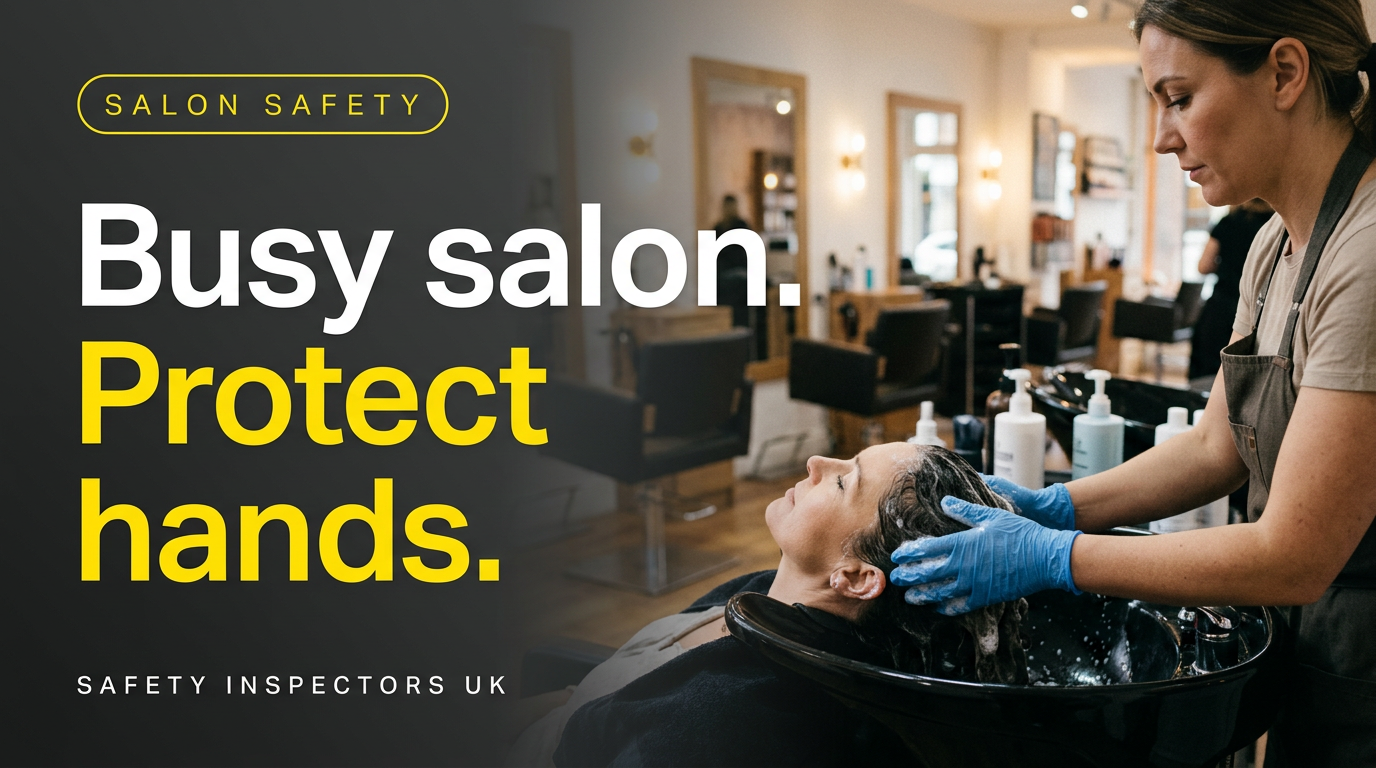
The appointment book is full. One person is moving between shampooing, rinsing colour and cleaning bowls. Their hands barely get a chance to dry.
For salon owners, protecting hands needs to be part of organising the working day. A box of gloves in the stockroom and a bottle of hand cream are useful only if staff can use them properly when the salon is busy.
Look beyond the colour appointment
HSE’s hairdressing advice identifies frequent contact with water and shampoo as a cause of skin irritation and dermatitis. Hairdressing and cleaning products can also cause dermatitis and skin allergies. Shampooing therefore belongs in your assessment alongside colouring and bleaching.
Walk through a normal day with the team. Who washes most clients’ hair? Who rinses the equipment and wipes surfaces? Are the same hands doing all the wet tasks? Include apprentices and staff covering an absent colleague, rather than assessing only the senior stylist’s usual routine.
For businesses in Great Britain, COSHH requires risks from hazardous substances to be controlled. HSE’s assessment guidance asks employers to consider exposure, its frequency and duration, and the controls needed. Product labels and safety data sheets inform that assessment; collecting them is not the whole assessment.
Change the routine before relying on gloves
HSE’s prevention approach starts with avoiding unnecessary contact. Consider safer products, tools and ways of working before relying on protective equipment. Keep contamination off work surfaces so the next person does not pick it up unknowingly.
As a practical management step, review how wet tasks are allocated. Could the timetable give someone a dry task between periods at the basin? Reorganising work can support exposure control, but it does not remove the need for suitable gloves and other precautions. Do not simply move an uncontrolled task to another employee.
Make the routine workable: put the right supplies close to where they are needed, identify who replenishes them and include a check before the busiest part of the day. Ask staff what makes the agreed method difficult to follow.
Check the work as it happens
Our health and safety inspections can help you review everyday workplace arrangements and identify practical actions. Tell us about your salon and the tasks you want examined.
Choose gloves for the product, task and person
HSE’s glove-selection guidance explains that no glove material protects against everything indefinitely. Check product information and supplier advice for the actual substances and contact involved. Fit, comfort and dexterity matter as well as the material.
HSE recommends disposable non-latex gloves for shampooing, colouring and bleaching, with a change between clients. Its hairdressing advice favours smooth, snug-fitting gloves with enough length to protect the wrists. Provide the sizes your team needs and show staff how to remove gloves without spreading contamination.
Make hand drying and moisturising easy. HSE’s skin FAQs are clear that barrier cream cannot replace suitable gloves. Dry, cracked skin should not be dismissed as something a hairdresser simply has to tolerate.
Give skin concerns a clear response
Tell staff whom to contact if they notice dryness, itching, redness or cracking. Encourage prompt reporting rather than waiting until symptoms interfere with work. Someone who suspects work-related dermatitis should seek advice from their GP or occupational health service and explain their work exposures.
HSE’s health-surveillance guidance identifies wet work and reliance on gloves among situations where surveillance may be appropriate. Your risk assessment should establish what is required. Obtain occupational health advice on the programme, checks and follow-up; a manager should not try to diagnose a skin condition.
A report should also trigger a review of exposure controls. Check whether products, tasks or glove supplies have changed, and agree suitable work arrangements with appropriate professional advice. Keep personal health information handled confidentially.
Six checks before the busy period
- Tasks: identify who will do the washing, rinsing and cleaning across the shift.
- Products: confirm the assessment covers the products actually in use.
- Gloves: check suitability, sizes and stock at the point of use.
- Hand care: provide suitable washing, drying and moisturising supplies.
- Understanding: ask staff to demonstrate the agreed glove routine.
- Follow-up: confirm who receives concerns and who closes outstanding actions.
Make one improvement this week
Choose a busy session and observe the basin and cleaning routines with staff. Record one specific gap, an owner and a completion date, then check whether the change works. For North East salons, this is an application of national guidance to everyday work, not a separate local requirement.
If actions repeatedly slip between appointments, retained safety support can help you maintain a consistent review process.
Build safer routines around your salon
Tell us your location, team size and the practical safety issue you want help with.
Request safety supportSources and scope
Source check: 20 November 2026. The linked HSE pages provide the primary sources for this evergreen guide. COSHH duties are law; the practical measures described draw on HSE guidance. This article concerns workplace prevention in Great Britain and does not provide a medical diagnosis.