The cattle are ready to move, the vet is due and a gate that worked last time will no longer latch properly. That is a decision to resolve before handling starts. Once animals are in the race, a repair or change of plan becomes much harder to manage.
For North East livestock businesses, a short walk through the empty handling system is a useful starting point. It should lead to clear decisions about equipment, people and the job planned that day. This guide draws on established HSE guidance for Great Britain; it is not a report of a new incident or a new legal requirement.
Start with the animals and the actual task
HSE identifies crushing, kicking, butting and goring as cattle-handling risks. Familiarity does not remove them. Its AIS35 guidance asks managers to consider the person, the equipment and the animal together, including the animal’s health and experience of being handled.
Write down what the session involves: weighing, routine treatment or specialist work. Confirm that the facilities suit both the cattle and the procedure. A general-purpose setup should not be assumed suitable for every veterinary or foot-care task. Discuss specialist restraint requirements with the person doing that work before the appointment.
HSE explains that the law requires risks from work activities to be assessed and controlled so far as reasonably practicable. The practical checks here support that duty; they do not replace a farm-specific assessment.
Walk the empty route from collecting pen to exit
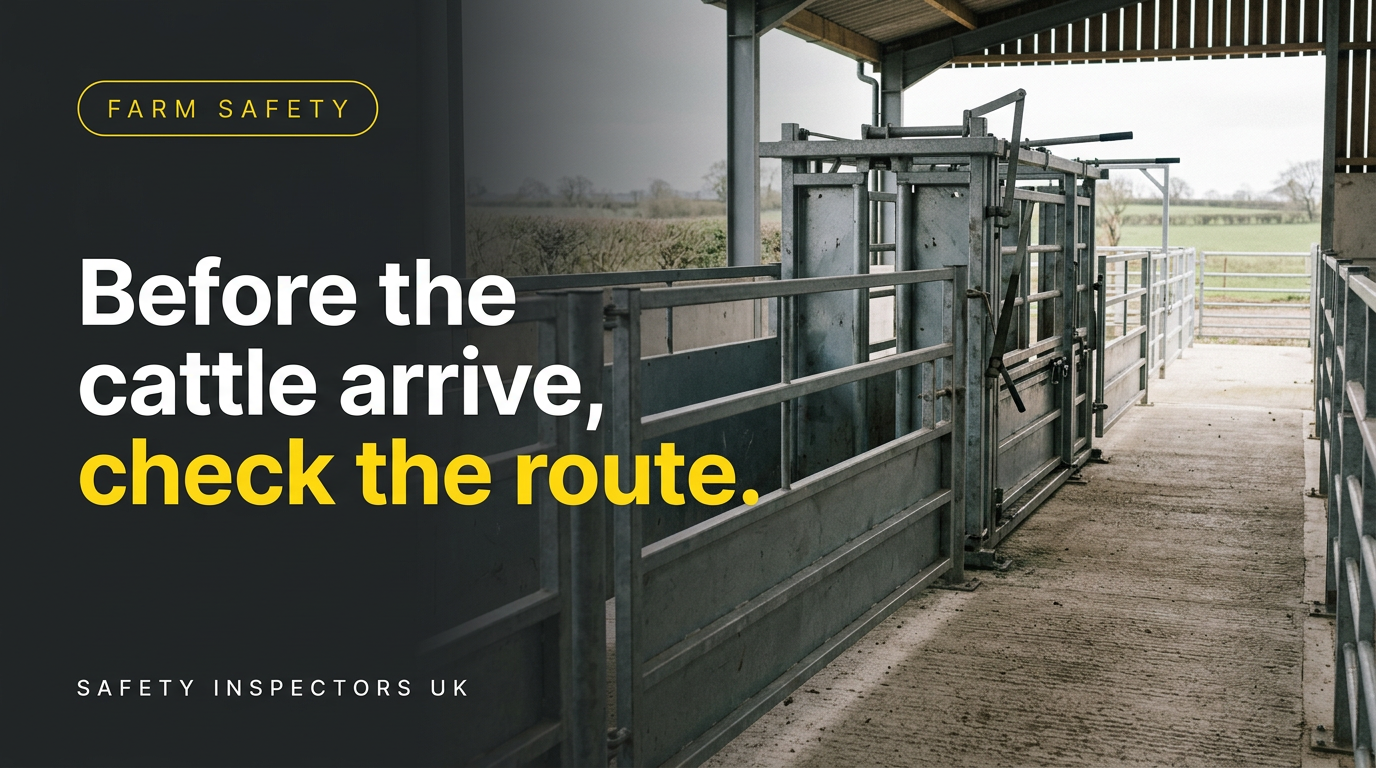
Look at how cattle will enter the race and where they will go after leaving the crush. HSE advises providing sufficient collecting space, avoiding tight turns and allowing animals to see clearly ahead. Poor lighting and visual distractions deserve attention when reviewing reluctant movement.
Check the gates, fixings and latches, then look at the space needed to operate them. HSE’s design guidance says it should be possible to operate the race without entering it, with a cattle-free working area around the crush. Keep that space available for the people using it.
A practical management check is to walk the agreed access and escape routes while the system is empty. Move stored items that obstruct them and identify places where a person could be trapped by a moving gate. Do not improvise a layout change on the assumption that another hurdle will solve the problem; obtain competent advice where the design needs alteration.
Need a fresh look at your arrangements?
Our health and safety inspections can help identify workplace issues and turn findings into prioritised actions. Describe the livestock work and facilities when enquiring so the scope can be agreed.
Check restraint before relying on it
HSE warns against treating animals held only by gates or otherwise free to move. Its livestock guidance calls for a suitable race and crush, kept in working order, and says not to work on an animal in the crush with an unsecured animal waiting behind it.
Check the crush against its instructions, including securing arrangements, the floor, locking mechanisms and restraints needed for the task. Confirm that gates move properly and that users know how to operate the equipment. A defect affecting safe restraint needs a clear decision: repair it appropriately or use a suitable alternative before work begins.
Record the defect and who owns the repair. Tell everyone affected which equipment is unavailable. A note in a maintenance book is unlikely to help if the next person preparing the cattle has not seen it.
Brief the team before moving the first animal
AIS35 stresses training, competence and supervision, and says some cattle work needs two people. Assess the help required for this task rather than relying on whoever happens to be nearby. Agree who moves animals, operates gates and works at the crush.
Show visiting workers the arrangements and ask whether they can carry out their part safely. Agree a simple stop signal and who makes the decision to resume. Make sure a replacement worker receives the same briefing; knowing the farm does not necessarily mean knowing this setup.
After the session, ask what made the work difficult. Record reluctant movement, unreliable fittings or situations where someone had to step into an unsafe position. Use those observations to improve the next session. For ongoing action tracking, explore our retained safety services.
Before-handling checklist
- Confirm the cattle, procedure and suitable restraint.
- Inspect the race, crush, gates, floor and fixings.
- Keep working areas and agreed escape routes clear.
- Resolve safety-critical defects before use.
- Check competence, supervision and assistance.
- Agree roles, communication and stop arrangements.
- Record repairs and improvements for the next session.
Make the next session easier to manage
Choose a time when the system is empty to review the route with the people who use it. If you need support reviewing the wider safety arrangements, tell us what you handle and where the difficulties occur.
Request safety support